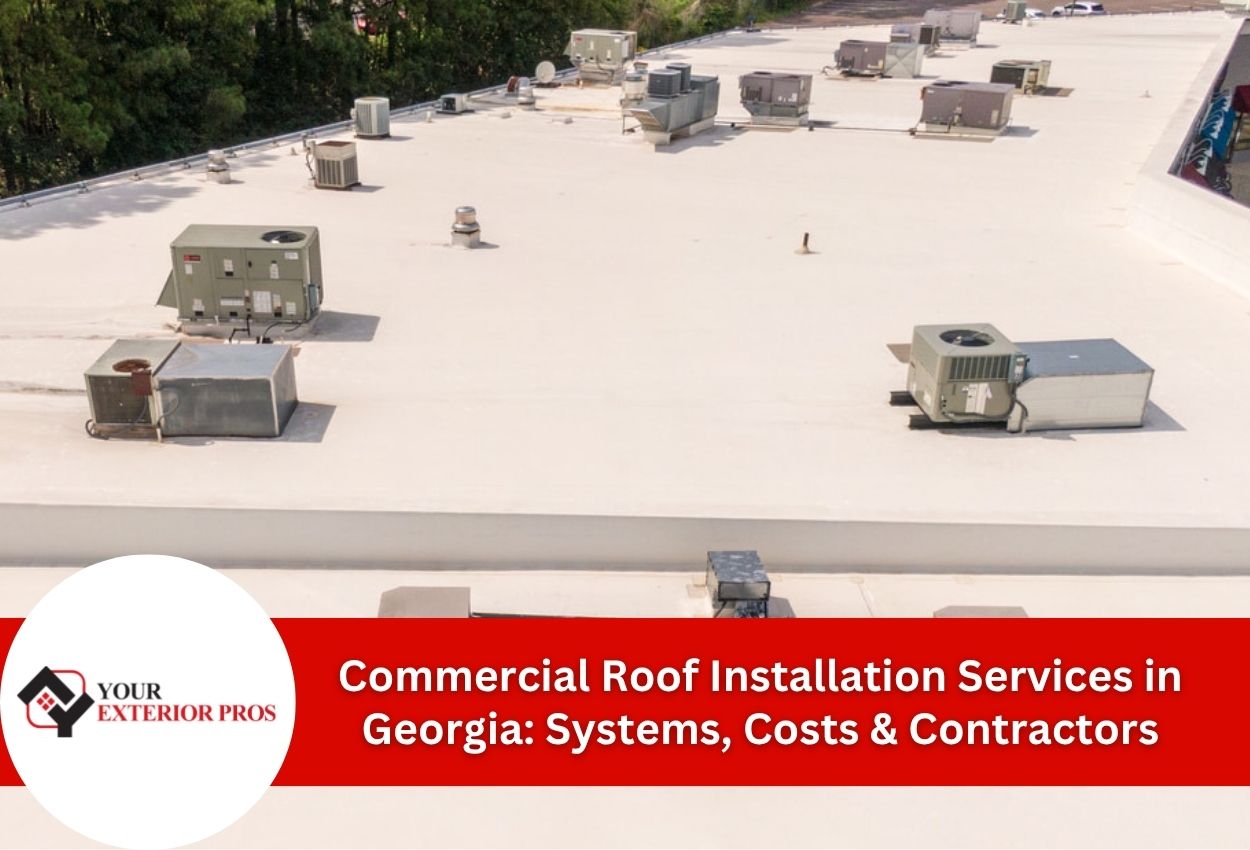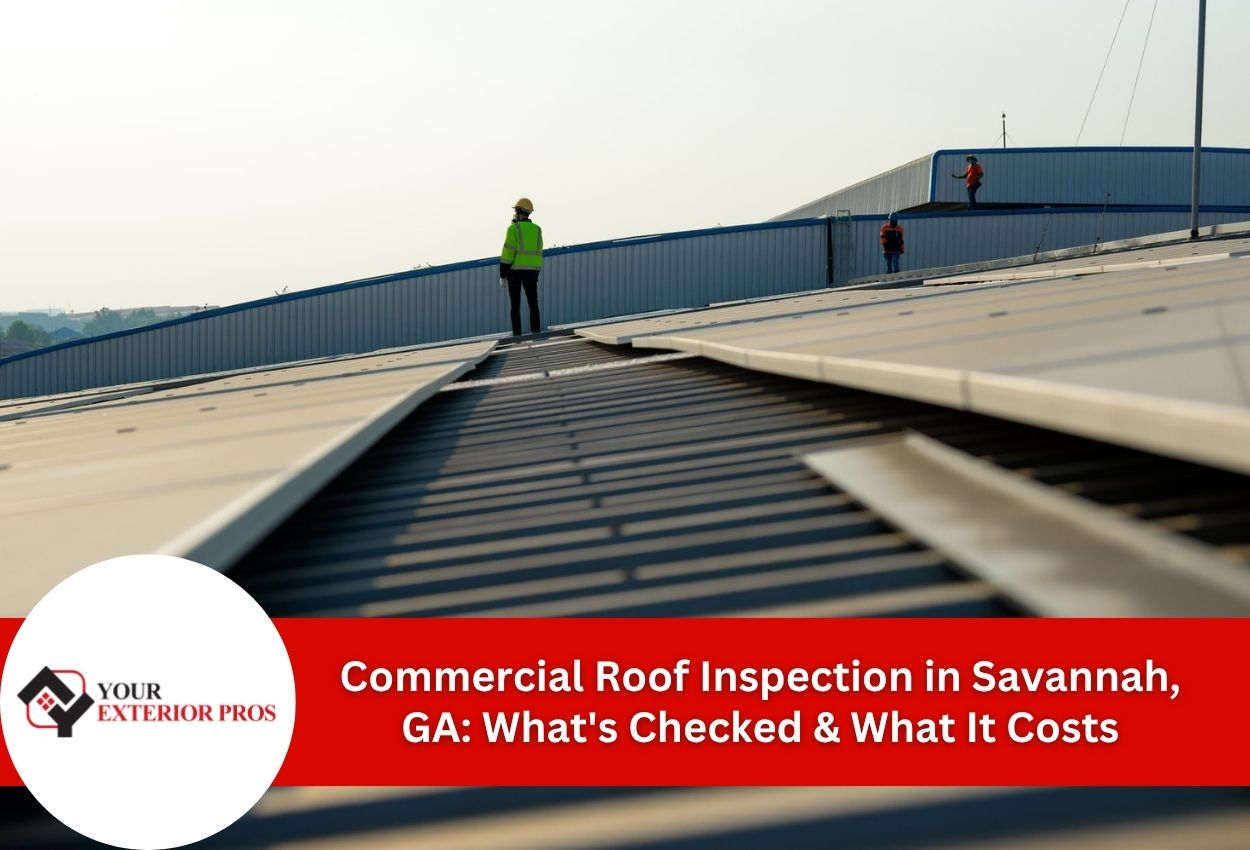
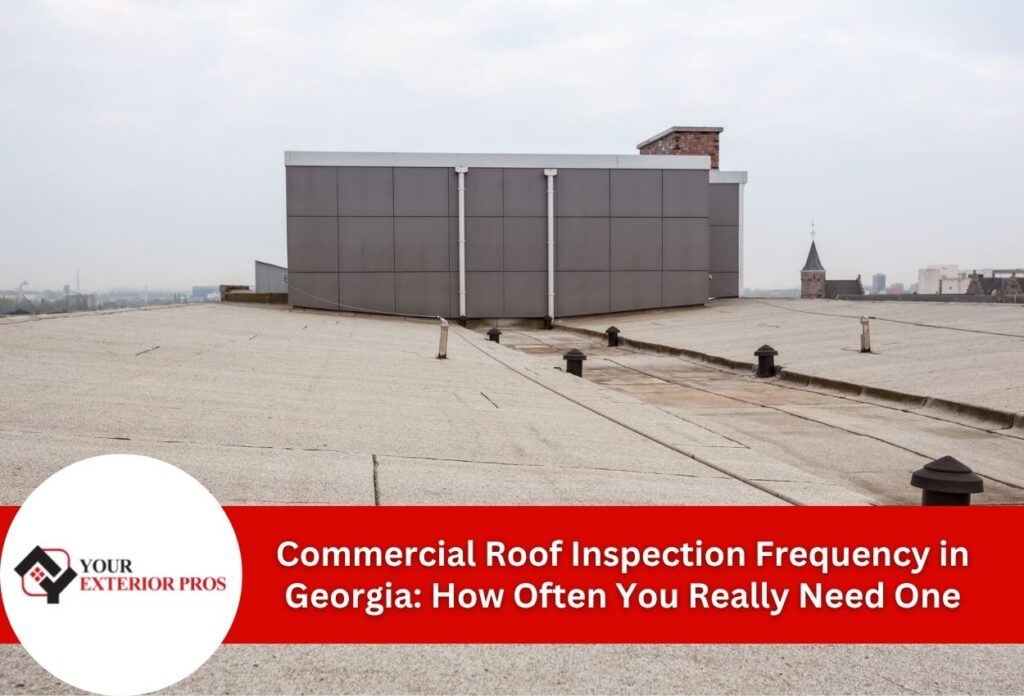

Georgia’s climate hits commercial roofs with four measurable stressors every single year: UV exposure from roughly 217 sunny days annually, thermal expansion and contraction across wide seasonal temperature swings, ponding risk from 45 to 55 inches of annual rainfall on low-slope systems, and wind uplift from spring thunderstorms and late-summer tropical systems. Each one shortens roof lifespan on its own. Together, they add to further damage fast.
UV exposure breaks down membrane materials like TPO commercial roofing, EPDM, and PVC over time, making surfaces brittle and seams more likely to separate. Georgia’s summer highs of 88 degrees to 92 degrees push membrane surfaces well above air temperature, and the daily heating and cooling cycle causes materials to expand and contract repeatedly. On low-slope roofs, that movement stresses seams and flashing connections year after year.
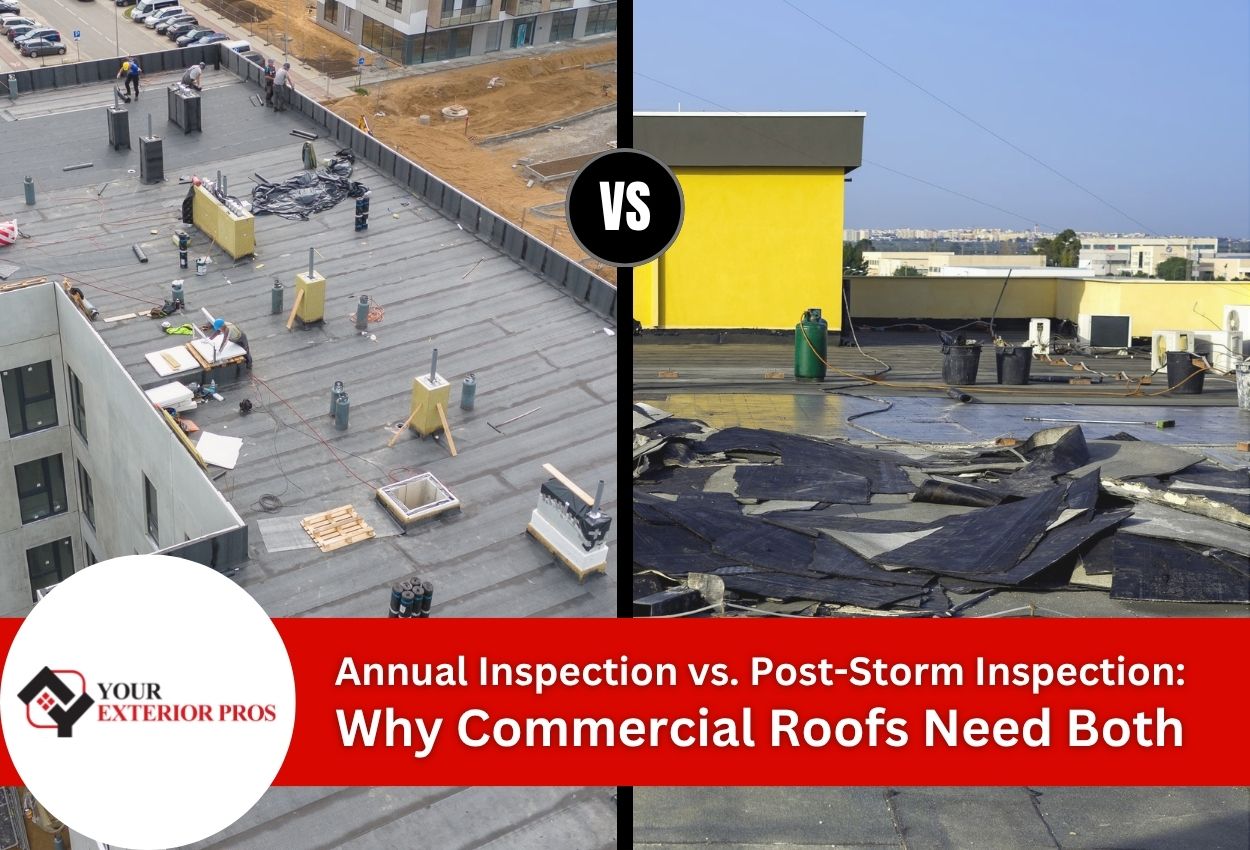
The two highest-risk weather windows for sudden membrane, flashing, and seam damage are Georgia’s spring tornado season with peak risk running March through May, and late-summer tropical systems that bring prolonged heavy rain and sustained wind. Both can open seam gaps, lift flashing, and overwhelm drains in a single storm.
Spring inspections directly address winter stress and get roofs ready before storm season peaks, while fall inspections focus on clearing debris-blocked drains, managing leaves on low-slope surfaces, and verifying the seam’s structural integrity before colder, wetter conditions arrive. Aligning inspections to these two windows is the most direct way to catch damage before it becomes an expensive repair.
What Is the Recommended Commercial Roof Inspection Schedule for Georgia Properties?
Georgia commercial roofs require a minimum of two scheduled inspections per year plus an unscheduled post-storm inspection after any qualifying storm to stay aligned with insurer requirements, manufacturer warranty terms, and Georgia’s actual weather risk calendar.
| Inspection Period | Recommended Months | Primary Focus Areas | Key Risk Being Addressed | Who Typically Requires It |
|---|---|---|---|---|
| Spring Inspection | March to April | The seam’s structural integrity, flashing connections, drain flow, membrane surface condition | Winter stress damage: preparation before peak storm season (March to May) | Insurance carriers, facilities managers |
| Fall Inspection | October to November | Debris-blocked drains, ponding areas, seam separation, flashing re-adhesion | Drain blockage and ponding risk entering wet, cooler months | Manufacturers, facilities managers, property management firms |
| Post-Storm Inspection | Within 30 to 90 days of qualifying event | Membrane punctures, lifted flashing, seam gaps, drain damage | Winds ≥50 mph, hail ≥1 inch diameter, or named tropical systems | Warranty holders, insurance carriers: most commercial roof warranties require documented inspection within 30 to 90 days to preserve coverage |
The post-storm row carries real financial weight. Skipping a documented inspection after a qualifying event can void warranty coverage on TPO, EPDM, and PVC membranes, most of which carry 15- to 30-year terms that include inspection compliance requirements. Roofs over 20 years old or flat roofs with a history of ponding should move to quarterly inspections, 4 per year, since age and drainage stress accelerate the failure points these scheduled visits are designed to catch. Staying on schedule is far less expensive than losing warranty protection or repairing leaks that a missed inspection would have caught early.
What Are the Signs a Commercial Roof in Georgia Needs an Immediate Inspection?
Any one of these nine observable warning signs means scheduling an unscheduled inspection right away, not at the next routine visit.
- Ponding water standing more than 48 hours after rainfall: On low-slope TPO, EPDM, or modified bitumen commercial roofing roofs, water that does not drain within 48 hours is actively accelerating membrane deterioration and seam stress.
- Interior water stains larger than 6 inches in diameter: Ceiling stains that size or larger on interior surfaces indicate active intrusion, not residual condensation.
- Membrane blistering or bubbling covering more than 10 square feet: Blisters of that scale signal trapped moisture or adhesion failure beneath the surface conditions that spread quickly in Georgia’s humid summers.
- Visible membrane lifting or displaced flashing after any storm: Windstorms with gusts above 50 mph, common during Georgia’s spring thunderstorm season, can break flashing seals in a single pass.
- Green algae or moss growth on 5% or more of the surface of the roof: In Georgia’s high-humidity warm season, algae and moss growth signals persistent moisture retention and compromised drainage, both signs that drainage stress has already begun.
- Seam gaps or separations visible: Any open seam is an active entry point for water, regardless of how small it appears at ground level.
- Roof deck deflection or soft spots underfoot: Spongy areas when walked indicate saturated or rotting roof decking beneath the membrane.
- Clogged or damaged drains after a heavy rainstorm: Blocked drains after storms exceeding 2 inches of rainfall are a direct path to standing water and accelerated membrane failure.
- Punctures or surface tears larger than 1 inch: Any puncture that size or larger from foot traffic, fallen branches, or HVAC equipment bypasses the membrane’s waterproofing entirely.
Skipping an inspection after any of these signs appear is a leading cause of minor repairs costing $500 to $2,000, escalating into major structural repairs reaching $15,000 to $80,000+ on Georgia commercial properties. Catching visible warning signs early is the single most direct way to protect a commercial roof investment. Your Exterior Pros provides commercial roofing inspections for Georgia building owners who spot any of these conditions.
Which Commercial Roofing Systems in Georgia Need More Frequent Inspections?
Low-slope membrane systems TPO, EPDM, and PVC require inspections at least twice per year and often more, making them the highest-maintenance roof types on Georgia commercial buildings. The table below compares all 5 common systems across the factors that matter most to building owners.
| Roofing System | Recommended Inspection Frequency | Primary Vulnerability in Georgia’s Climate | Average Manufacturer Warranty Length |
|---|---|---|---|
| TPO | 2 to 4 times per year | Seam separation from UV exposure and ponding on low-slope surfaces | 15 to 20 years |
| EPDM | 2 to 4 times per year | Membrane shrinkage and seam adhesive failure under Georgia’s heat and humidity | 10 to 20 years |
| PVC | 2 to 4 times per year | Ponding and seam stress from 45 to 55 inches of annual rainfall on flat drainage profiles | 15 to 20 years |
| Modified Bitumen | 2 to 3 times per year | Surface cracking and lap seam failure from repeated thermal expansion and contraction | 10 to 15 years |
| Metal | 1 to 2 times per year | Fastener corrosion and panel seam separation following spring hailstorms | 30 to 40 years |
TPO, EPDM, and PVC dominate Georgia’s office, retail, and warehouse buildings because they are cost-effective on large, flat surfaces, but that flat profile makes ponding and seam failure a constant risk given the state’s rainfall volume. Metal roofs on industrial and utility structures hold up better over time and need a minimum of one inspection per year, though any hailstorm during Georgia’s active spring season warrants an additional check for fastener corrosion and panel seam separation.
A low-slope membrane roof showing a history of ponding should move to 4 inspections per year, since standing water accelerates seam failure faster than any other single factor in Georgia’s climate.
What Does a Commercial Roof Inspection Cost in Georgia and What Does Skipping One Cost?
A routine professional inspection on a commercial roof up to 20,000 sq ft in Georgia runs $300 to $600, a fraction of what repairs cost when damage goes undetected. The numbers below show exactly how fast that gap grows.
| Cost Scenario | Total Cost Range | Estimated Cost per Sq Ft | When This Applies |
|---|---|---|---|
| Routine professional inspection (up to 20,000 sq ft) | $300 to $600 | $0.02 to $0.03 | Scheduled twice-a-year visits |
| Repair cost when damage is caught early at inspection | $500 to $3,500 | $0.05 to $0.18 | Seam gaps, minor flashing failure, small punctures found before water entry |
| A major repair after a leak | $15,000 to $120,000+ | $0.75 to $6.00+ | Saturated roof decking, structural damage, full membrane failure discovered late |
Inspections done twice a year on a 10,000 sq ft commercial roof cost about $600 to $1,200 annually. Compare that to average early-repair costs of $1,500 to $4,000, and the math is straightforward: catching damage in the first inspection cycle prevents 10:1 to 30:1 cost escalation. Skipping inspections does not save money; it converts a $300 to $600 line item into a 5- or 6-figure commercial roof repair bill.
Most commercial property insurance policies in Georgia also require documented inspections, typically at least once per year to maintain full coverage eligibility. Missing that documentation can result in denied claims or reduced payouts after a storm.
Ready to Schedule Your Commercial Roof Inspection in Georgia?
Catching damage early before a $300 to $600 inspection turns into a $15,000 to $120,000+ repair starts with getting on the schedule before spring storm season or fall debris loading fills available slots. Spring and fall inspection windows book quickly in Georgia, especially after active storm seasons when post-event demand runs high. Your Exterior Pros works with commercial building owners across Georgia to get inspections completed during those peak windows before availability tightens.
Ask about a custom inspection and maintenance plan matched to your roofing system type, building size, and inspection history, whether that means twice a year for a newer metal roof or quarterly visits for a low-slope membrane system with a history of ponding.
Not ready to schedule? Learn more about commercial roofing inspections and maintenance.