How Long Does a TPO Roof Installation Take on a Commercial Building?
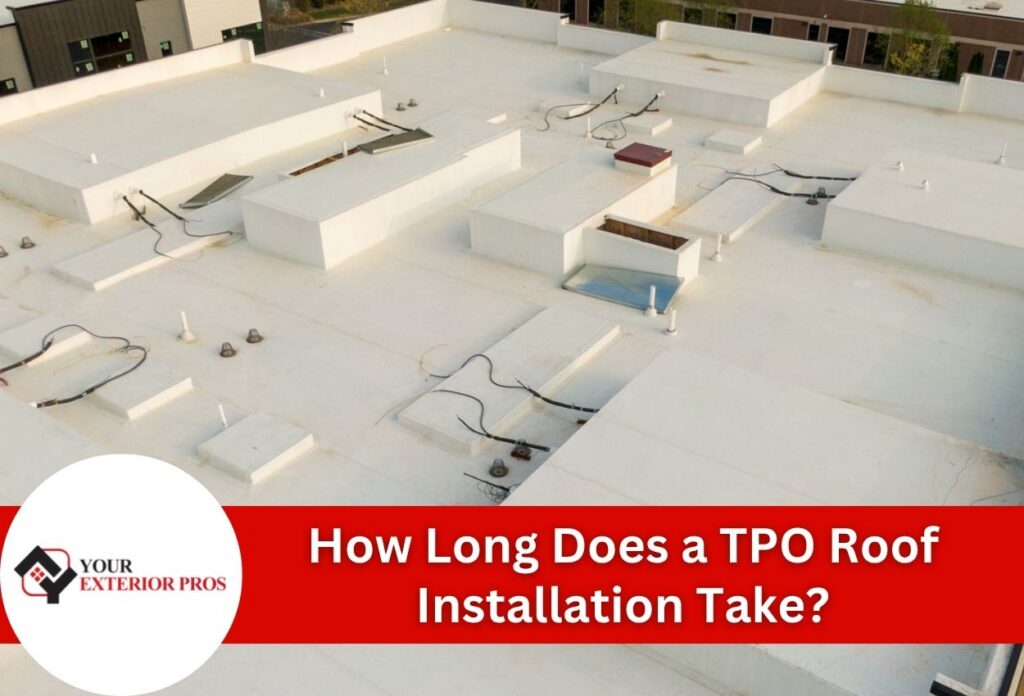

Most commercial TPO roofing projects take 1 to 5 days for buildings under 20,000 square feet, and 1 to 3 weeks for larger or more complex roofs. Roof size, roof deck condition, insulation layers, and the number of gaps all affect how long the job runs. A clean, well-drained roof with no structural damage moves faster than one that needs tear-off, redecking, or extensive flashing work.
In the Savannah area and along the coastal Georgia and South Carolina markets, local conditions can add 1 to 2 days to average timelines. High humidity, afternoon thunderstorms, and salt-filled air mean crews must wait for dry underlayment before seaming or adhering membrane. Rushing that step leads to failed seams and moisture trapped under the membrane.
What Factors Determine How Long a TPO Roof Installation Takes?
Six variables account for most of the difference between a 2-day TPO project and a 2-week one, and roof size alone can shift the timeline by several days before any other factors are added.
- Roof size: Every 10,000 square feet adds roughly 1 to 2 days for a standard crew. A 30,000-square-foot roof can take 3 to 6 days on size alone, before complexity or condition issues are factored in.
- Crew size: A 3-person crew installs about 20 to 40 squares per day. A 5-person crew can reach 40 to 80 squares per day, nearly double the output, which shrinks timelines on larger roofs.
- Underlayment condition: If existing roofing must be torn off, add roughly 1 full day per 10,000 square feet. Poor roof deck condition requiring redecking adds additional time on top of that.
- Roof complexity: Each HVAC unit, drain, pipe gaps, or curb-mounted skylight adds 2 to 4 hours of labor. A roof with 12 gaps can easily add a full day to the schedule.
- Attachment method: Mechanically fastened TPO installs run 10% to 20% faster than fully adhered systems, which require adhesive cure time before crews can move to the next phase.
- Permits and inspections: Georgia and South Carolina coastal jurisdictions commonly require permits for reroofing projects. Inspection scheduling alone can add 1 to 3 business days to the overall project duration, time that does not appear in a crew’s daily work plan.
Summer conditions in Savannah add one more layer of pressure. Heat indexes above 100 degrees Fahrenheit and afternoon storm windows can cut productive work hours to 5 to 6 hours per day, compared to 8 to 9 hours achievable in fall or spring.
A job that takes 3 days in October can take 4 to 5 days in July simply because of extreme heat restrictions and sudden weather delays. Any realistic schedule from a contractor in this market should account for seasonal productivity differences before work begins.
What Does the TPO Roof Installation Process Look Like Day by Day?
A 10,000-square-foot commercial TPO project runs 3.5 to 7 days total, broken into 7 distinct phases. Tracking each phase against your contractor’s schedule reveals exactly where the job stands and whether it’s on pace.
| Phase | Description | Estimated Time (10,000 sq ft) |
|---|---|---|
| 1. Tear-off & Debris Removal | Remove existing roofing material and haul off debris | 0.5 to 1 day |
| 2. Roof Deck Inspection & Underlayment Repair | Identify damaged roof decking, make repairs before new materials go down | 0.5 to 1 day |
| 3. Insulation Board Installation | Set and fasten rigid insulation layer across the roof deck’s surface | 0.5 to 1 day |
| 4. Membrane Layout & Attachment | Roll out TPO membrane, mechanically fasten or adhere to underlayment | 1 to 2 days |
| 5. Seam Welding & Flashing | Hot-air weld membrane seams; install base and counter flashing | 0.5 to 1 day |
| 6. Gap Detailing & Drain Work | Flash around HVAC curbs, pipes, and drains | 0.25 to 0.5 day |
| 7. Final Inspection & Cleanup | Walk the roof, verify the seam’s structural integrity, remove all materials and waste | 0.25 to 0.5 day |
Seam welding in Phase 5 is the most weather-sensitive step in the entire process. TPO hot-air welding requires surface temperatures above 40 degrees Fahrenheit and fully dry conditions, and in the Savannah market, morning dew and afternoon thunderstorms are the two most common reasons this phase gets pushed to the next day.
A single rain delay during seam welding can add 0.5 to 1 full day to the project, even on a job that’s been running ahead of schedule. Property owners can use this phased installation timeline to check progress against their contractor’s proposed schedule and spot slowdowns before they add up.
How Many Days Does It Take to Replace a Flat Roof with TPO Based on Building Size?
Small commercial buildings in the 5,000 to 15,000 square foot range represent the most frequent TPO roofing projects, typically taking 2 to 4 days to complete with an uninterrupted crew working under standard conditions.
| Building Size | Total Project Duration | Estimated Crew Size | TPO Installation Rate (squares/day) |
|---|---|---|---|
| Under 5,000 sq ft | 1 to 2 days | 2 to 3 workers | 15 to 30 squares/day |
| 5,000 to 10,000 sq ft | 2 to 4 days | 3 to 4 workers | 25 to 50 squares/day |
| 10,000 to 20,000 sq ft | 4 to 7 days | 4 to 5 workers | 40 to 70 squares/day |
| 20,000 to 50,000 sq ft | 7 to 14 days | 5 to 8 workers | 60 to 100 squares/day |
| Over 50,000 sq ft | 3 to 6 weeks | 8+ workers | 100+ squares/day |
The average TPO roofing project duration for a small commercial building in the 5,000 to 15,000 square foot range lands between 2 and 4 days when the job runs straight through without interruption. For occupied buildings, phased scheduling, completing one roof section before moving to the next, is common and can extend total calendar duration by 30% to 50% compared to a single-phase installation.
A 4-day job on an occupied building could easily stretch to 5 to 6 calendar days once phased scheduling is factored in. Property owners planning around business operations should ask their contractor for a phased timeline before work begins, not after.
What Does TPO Roofing Cost, and How Does Installation Time Affect Your Total Budget?
TPO roofing in Savannah and the coastal Georgia and South Carolina markets runs $3.50 to $7.50 per square foot installed, depending on project size, and timeline decisions can add 10% to 25% on top of that base cost.
| Project Size | Installed Cost per Sq Ft | Estimated Total Installed Cost | Estimated Project Days |
|---|---|---|---|
| Under 5,000 sq ft | $4.50 to $7.50 | $11,250 to $37,500 | 1 to 2 days |
| 5,000 to 15,000 sq ft | $4.00 to $6.50 | $20,000 to $97,500 | 2 to 5 days |
| 15,000 to 50,000 sq ft | $3.50 to $5.75 | $52,500 to $287,500 | 5 to 14 days |
Timeline choices directly shape the final invoice. Compressing a 5-day project into 3 days typically adds 15% to 25% to labor costs through overtime or accelerated crew scheduling. Phased scheduling for occupied buildings adds 10 to 20% due to repeated mobilization between sections. Weather delays exceeding 2 days may trigger change-order clauses in some contracts, a real consideration in a market where summer afternoon thunderstorms arrive with little warning.
Lifespan also affects total cost of ownership. TPO roofs in humid climates like Savannah typically last 15 to 20 years with proper installation, compared to 10 to 15 years for torch-down modified bitumen roofing.
That gap, combined with TPO’s 20- to 30-year manufacturer warranty tiers, means a building owner may replace a modified bitumen roof twice before a properly installed TPO system needs attention. Your Exterior Pros serves commercial property owners across the Savannah area and coastal Georgia and South Carolina markets, where those long-term cost differences matter most on low-slope and flat roofing systems exposed to high UV, humidity, and wind-driven moisture year-round.
How Should You Evaluate a Contractor’s Proposed TPO Installation Timeline?
Ask every contractor to state their installation rate per square explicitly; that single number lets you compare bids on equal footing and flag schedules that don’t add up before work begins.
- Permit lead time is accounted for: Georgia and South Carolina coastal jurisdictions typically require 3 to 10 business days for permit approval. A proposed start date that ignores this window is already behind before the crew arrives.
- Daily production rate matches crew size: Ask the contractor to state their TPO roofing installation time per square foot and total squares per day. A crew of 4 or more workers can realistically install 40 to 80 squares per day; any rate above 80 squares per day with fewer than 4 people on site is a red flag.
- A weather contingency plan is written into the schedule: In the Savannah market, afternoon thunderstorms arrive regularly from May through September. Ask how delays are communicated and whether seam welding is scheduled for morning hours to stay ahead of those afternoon rain windows.
- Buffer days exist on larger projects: A timeline with zero buffer days on any project exceeding 10,000 square feet leaves no room for weather delays, inspection holds, or underlayment surprises, all common in coastal Georgia and South Carolina.
- Phased sections are clearly mapped for occupied buildings: If the building stays open during work, the proposal should identify each phase as a defined roof section with its own start and completion date, not a vague reference to “working around tenants.”
- Inspection scheduling is included: Final inspections can add 1 to 3 business days to the overall duration. A timeline that stops at installation completion without accounting for inspection hold time will surprise a property owner at the worst moment. Scheduling a commercial roof inspection before work begins can help identify underlayment issues that would otherwise surface mid-project and extend the timeline.
Two schedules should be rejected outright: any contractor proposing more than 80 squares per day with a crew under 4 people, or any timeline with zero buffer days on a project exceeding 10,000 square feet. Both scenarios compress quality workmanship into an unrealistic window. Comparing each contractor’s stated squares-per-day rate against crew size is the fastest way to tell which proposals are realistic and which ones are built to win the bid, not complete the job properly.
Ready to Get an Accurate TPO Roofing Timeline for Your Property?
An accurate project schedule keeps your building operational and your budget on track. The difference between a 2-day job and a 5-to-6-day job on an occupied building can mean thousands of dollars in added labor costs and business disruption.
Your Exterior Pros works with commercial property owners in Savannah, Pooler, Richmond Hill, Bluffton, Beaufort, and Hilton Head to deliver site-specific TPO roofing assessments with written timelines and itemized quotes so there are no surprises once work begins.
Request your free roofing estimate.
Not ready to schedule? Learn more about TPO roof installation.