



Complete SBS vs. APP Modified Bitumen Roof Comparison for Savannah Business Owners
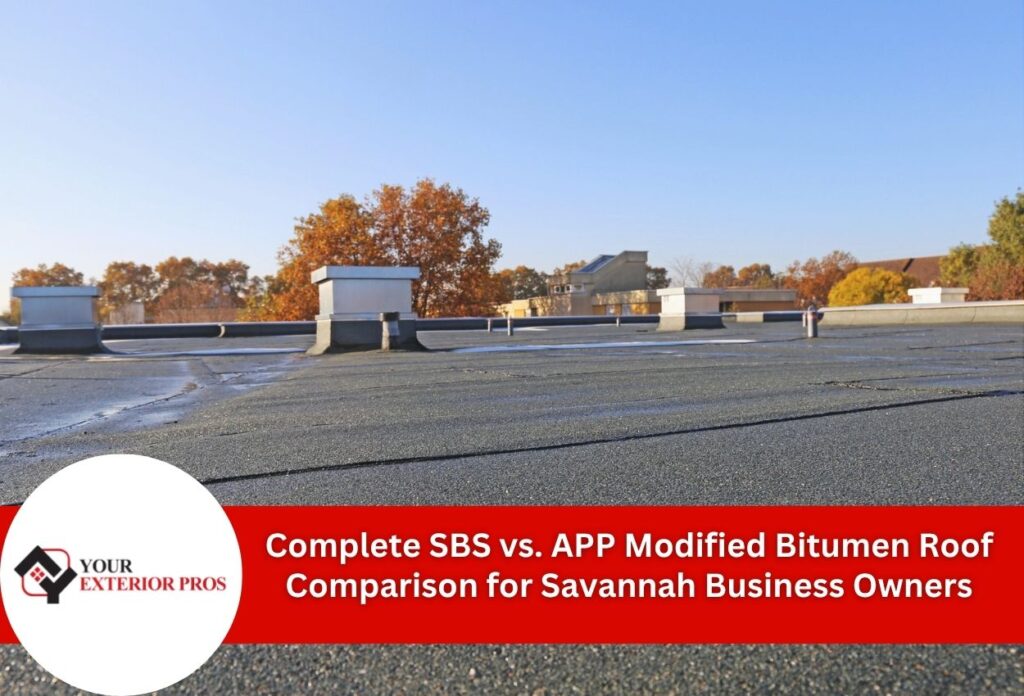

Modified bitumen roofing systems are a go-to choice for commercial flat roofs across the country. These roofing materials combine traditional asphalt with modern polymer technology to create durable, weather-resistant membranes that outperform standard built-up roofing options.
Two primary types dominate the modified bitumen market: SBS rubber modified membrane and APP plastic modified roofing systems. Each system has distinct advantages that make it suitable for different building types, climates, and installation requirements. SBS systems use styrene butadiene styrene polymers that create flexible, rubber-like properties, while APP systems incorporate atactic polypropylene for enhanced heat resistance and durability.
The differences between these modified bitumen roofing systems includes more than their chemical composition. Installation methods vary significantly, with APP systems often requiring torch down application, while SBS membranes typically use cold-applied adhesives or self-adhering properties. Temperature performance, flexibility, and longevity also differ between the two options.
Understanding the characteristics of SBS vs. APP modified bitumen roofs helps property owners make informed decisions about their roofing investment. The right choice depends on specific building requirements, local weather conditions, and long-term maintenance considerations that affect overall roof performance and building protection.
What Makes SBS Rubber Modified Membranes Stand Out
SBS rubber modified membrane systems stand apart from other modified bitumen roofing systems through their unique polymer composition. The styrene butadiene styrene polymers create a rubber-like elasticity that allows the membrane to stretch and contract without cracking or splitting. This flexibility is essential when buildings experience thermal expansion and contraction during temperature fluctuations throughout the seasons.
The rubber modification enables SBS membranes to maintain their integrity during building movement caused by settling, wind loads, or structural shifts. Unlike rigid roofing materials that may crack under stress, SBS systems can accommodate movement while maintaining a watertight seal. This elasticity also helps prevent membrane failure at vulnerable areas like rooftop equipment and seams.
Installation methods for SBS systems offer contractors multiple options depending on project requirements. Cold adhesive application are one common technique, where contractors apply special adhesives to bond the membrane to the roof deck or substrate. This method eliminates the need for open flames on the job site, reducing safety concerns and making it suitable for occupied buildings.
Heat welding techniques are another installation approach for SBS rubber-modified membrane systems. Contractors use hot air welders to create strong, permanent seams between membrane sheets. This torch down application creates seamless joints that resist leaks and wind uplift, making it an excellent choice for commercial flat roof options in challenging weather conditions.
Characteristics of APP Plastic Modified Roofing Systems
APP plastic modified roofing systems utilize atactic polypropylene polymers that deliver exceptional heat resistance and UV protection capabilities. Unlike standard bitumen materials, APP membranes maintain their structural integrity and waterproofing properties even under extreme temperature conditions. The plastic modification creates a thermoplastic material that becomes pliable when heated during installation but returns to a durable, rigid state once cooled.
The superior UV resistance of APP plastic modified roofing membranes stems from the polymer’s ability to reflect harmful solar radiation while resisting degradation. This characteristic makes APP systems particularly effective in climates with intense sun exposure, where traditional roofing materials may deteriorate rapidly. The plastic modification also provides excellent resistance to ozone, chemicals, and environmental pollutants that can damage conventional roofing membranes.
Torch down installation is the standard application method for APP systems, requiring skilled contractors to use controlled flame application. During this process, the flame melts the membrane’s bottom surface, creating an immediate bond with the roof deck or base sheet. The torch down roofing technique produces a fully adhered system with exceptional wind resistance and waterproofing performance.
The controlled flame application requires precise temperature management to ensure proper adhesion without overheating the membrane. Professional installation teams must maintain consistent heating patterns while overlapping seams to create continuous coverage. This meticulous approach results in a monolithic roofing system that performs reliably across various climates and building configurations.
Climate Performance Comparison for Savannah Area Buildings
The hot, humid summers and frequent temperature fluctuations characteristic of Georgia’s coastal climate can stress modified bitumen roofing systems. SBS rubber-modified membranes excel in this environment due to their exceptional flexibility during thermal cycling. When temperatures soar above 90 degrees Fahrenheit during summer months, SBS membranes expand without developing stress cracks, then contract smoothly as evening temperatures drop. This elasticity is crucial for buildings experiencing daily temperature swings of 20 to 30 degrees, common in southeastern coastal regions.
APP plastic modified roofing membranes have superior performance under sustained high-heat conditions typical of Georgia summers. The plastic modification maintains membrane integrity when roof surface temperatures exceed 160 degrees Fahrenheit, preventing thermal degradation that affects standard bitumen systems. However, APP systems show less accommodation for rapid temperature changes, making them better suited for buildings with consistent thermal loads rather than structures experiencing frequent heating and cooling cycles.
Long-term durability expectations vary significantly between these modified bitumen roofing systems in southeastern environments. SBS membranes typically last longer than APP systems when properly maintained, with their rubber composition resisting cracking and separation that cause leaks.
Weather resistance factors that affect roof lifespan include UV exposure intensity, salt air corrosion, and storm damage potential. APP systems offer enhanced UV protection, extending their functional lifespan in high-radiation environments, while SBS systems provide better impact resistance against hail and debris from severe weather events common to the region.
Installation Requirements and Contractor Considerations
The installation methods for SBS and APP modified bitumen roofing systems require different skill sets and specialized equipment. SBS rubber-modified membrane installation typically involves cold application techniques that contractors can complete using standard roofing tools and adhesive application equipment. This approach allows roofing professionals to work safely without open flames, making it suitable for projects near occupied spaces or areas with fire restrictions.
APP plastic modified roofing installation needs advanced torch down roofing materials expertise and specialized equipment. Contractors must have extensive experience managing controlled flames to ensure proper membrane adhesion. The precision required for torch application means fewer contractors can perform APP installations compared to SBS systems, potentially affecting project scheduling and contractor availability.
Safety protocols differ significantly between these commercial flat roof options. SBS cold application eliminates fire hazards but requires proper ventilation for adhesive fumes and careful surface preparation to ensure membrane bonding. APP torch down installation mandates comprehensive fire safety measures, including fire extinguishers, firewatch personnel, and adherence to local fire department regulations governing open flame work on occupied buildings.
Building code requirements often influence contractor recommendations for modified bitumen roofing systems. Many jurisdictions restrict torch applications on certain building types or require special permits for flame-applied roofing work. These regulatory considerations affect project timelines and overall installation complexity, making SBS systems more accessible for buildings with strict fire safety requirements or limited contractor access windows.
Maintenance Needs and Repair Options Over Time
Both SBS and APP modified bitumen roofing systems require consistent maintenance to preserve their protective qualities and extend service life. Routine inspections should occur twice yearly, typically in spring and fall, focusing on membrane condition, seam integrity, and drainage system function. These scheduled evaluations help find issues before they worsen and compromise the entire building.
SBS rubber modified membrane systems benefit from regular cleaning to remove debris accumulation that can trap moisture against the membrane surface. Contractors should inspect for punctures, tears, or areas where the membrane may have pulled away from the substrate. The flexible nature of SBS systems makes them susceptible to physical damage from foot traffic or falling objects, requiring periodic assessment of high-traffic areas and rooftop equipment.
APP plastic modified roofing membrane maintenance focuses on monitoring UV degradation and surface granule loss. While APP systems resist heat damage effectively, prolonged sun exposure can cause surface deterioration over time. Regular inspections should document any areas showing excessive granule loss or surface cracking that might compromise the membrane’s waterproofing capabilities.
Repair options for both modified bitumen roofing systems include patch applications, seam reinforcement, and localized membrane replacement. Small punctures or tears can often be addressed using compatible patch materials and proper adhesion techniques. Larger damaged areas may require cutting out the affected membrane section and installing new material with appropriate overlap specifications. A professional assessment can determine whether repairs can restore system integrity or if broader restoration work is necessary to maintain building protection.
Choosing the Right Type of Modified Bitumen for Your Commercial Flat Roof Project
Selecting between SBS and APP modified bitumen roofing systems requires carefully evaluating factors that directly impact long-term performance and protection. Building type plays a big role in system selection, as structures with frequent thermal cycling benefit from the flexibility of SBS rubber modified membranes, while buildings with consistent heat exposure perform better with APP plastic modified roofing systems. The architectural design, occupancy, and structural characteristics all influence which system provides optimal protection.
Budget restraints and long-term costs should also be considered, including maintenance requirements and expected system lifespan. SBS systems often present lower upfront expenses due to simpler installation requirements and broader contractor availability. APP systems may justify higher initial investment through enhanced UV resistance and heat performance in appropriate applications. Property owners should evaluate the total cost of ownership rather than focusing solely on installation pricing.
Climate conditions significantly affect system performance for commercial flat roof options. Areas with extreme temperature fluctuations favor SBS flexibility, while regions with intense, sustained heat benefit from APP thermal resistance. Moisture levels, wind exposure, and severe weather frequency all impact which modified bitumen roofing systems provide superior long-term value.
Building access limitations and fire safety requirements often determine feasible installation methods. Structures with restricted flame application capabilities may require SBS cold application techniques, while buildings suitable for torch-down roofing materials can accommodate APP installation. Local building codes and insurance requirements may also influence system selection based on installation method restrictions and performance specifications. Consulting with professional roofing contractors can help property owners choose the best modified bitumen option for their building’s specific needs.
Choose the Best Roof for Savannah’s Climate with Your Exterior Pros
Deciding on the right roofing material for your commercial property in Savannah can be daunting. With the unique climate challenges of the area, it’s crucial to choose a roof that not only withstands the elements but also meets your building’s needs. Whether it’s the flexibility and temperature adaptability of an SBS rubber modified membrane or the superior heat and UV resistance of an APP plastic modified roofing system, Your Exterior Pros has the expertise to guide your choice.
Understanding the specific installation and maintenance requirements of each system can significantly impact your long-term satisfaction and roof performance. Don’t compromise on quality or suitability — let the experienced team at Your Exterior Pros help you make the right decision. Call us today at (912) 250-4730 to discuss your commercial flat roof options and ensure your investment is protected regardless of Savannah’s unpredictable weather.
Related Articles
-
 August 24, 2026Commercial Roof Installation Services in Georgia: What Business Owners Need to KnowReliable commercial roof installation in Georgia with expert service and free estimates.
 -
 June 23, 2026Commercial Roof Inspection in Savannah, GA: What’s Checked & What It CostsSavannah commercial roof inspection see what it includes and get a quote today.
 -
 January 13, 2026Your Guide to Modified Bitumen Roof Replacement for Commercial PropertiesModified bitumen roof replacement guide: costs, when to replace, and best options for your commercial property.
Protect Your Home with Expert Roofing
Don’t wait for leaks or storm damage to cause costly repairs. Our experienced roofing team provides fast, reliable service, high-quality materials, and lasting results. Ensure your home stays safe, secure, and looking great—contact us today for a free estimate.

