What Is the Emergency Roofing Process in GA and How Quickly Does It Start?

Most licensed emergency roofing contractors in Savannah, GA, respond within 1 to 4 hours, but during hurricane season, which runs from June through November, high demand can push that window out further. Savannah, GA Climate Summary Annual Precipitation Data shows Savannah averages 49 inches of rain per year, and coastal wind exposure adds constant stress to roofs across the region. That combination keeps emergency roofing demand elevated all year long, not just during storm season.
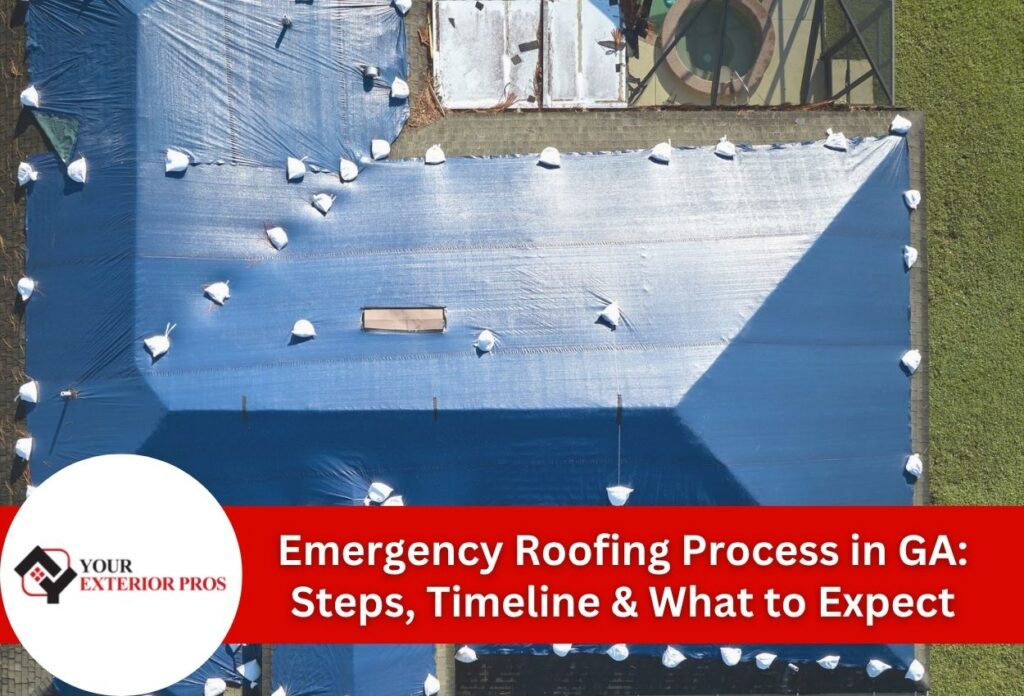
The emergency roofing process follows a clear sequence. A contractor inspects the damaged area first to check for safety risks and structural problems. Then, temporary tarps or patches go up fast to stop water from entering the home. The contractor documents the damage often for insurance purposes before scheduling a permanent repair once weather conditions allow safe, lasting work.
This article walks through each step of that process, what property owners in Savannah should expect, and how Your Exterior Pros handles emergency calls from first contact to finished repair.
What Are the Emergency Roof Repair Steps in Georgia?
Most emergency roofing contractors in Savannah follow a 5-step process from first arrival to permanent repair scheduling, with each phase serving a specific purpose and timeline. Here is how that process works:
- Initial safety assessment (15 to 30 minutes): The contractor checks the structure before anyone goes on the roof. This step identifies collapse risk, exposed electrical hazards, or severe sagging that could make the area unsafe to enter.
- Damage inspection (30 to 60 minutes): A full residential roof inspection covers missing shingles, damaged flashing, granule loss, and any signs of a leak. The contractor identifies the source of the leak, not just the visible symptoms.
- Temporary tarping or patching (within 2 to 6 hours of arrival): Tarps or emergency patches go up fast to stop active water entry. Temporary protection can last 30 to 90 days, depending on tarp grade and weather exposure, giving property owners a realistic window to plan permanent repairs.
- Photo documentation for insurance (30 to 45 minutes): The contractor photographs all damage before and after temporary repairs. Clear documentation supports homeowners’ insurance claims and prevents disputes over pre-existing versus storm-caused damage.
- Written estimate (same day or within 24 hours): A detailed written estimate outlines the scale of permanent repairs and associated costs.
- Permanent repair scheduling (based on weather and permit approval): Permanent work is scheduled once conditions stabilize and any required permits are in place. During hurricane season, June through November, scheduling may extend due to high demand across coastal Georgia.
Following this sequence protects both the property and the insurance claim. Skipping documentation or hiring an unlicensed contractor can complicate repairs and delay coverage.
How Long Does Emergency Roofing Take in Georgia, From First Call to Finished Repair?
Most emergency roofing jobs in Savannah move through 3 distinct phases, with the full process taking anywhere from 1 day to 10+ days, depending on the damage. Minor repairs like missing shingles or a small leak can be fully resolved in 1 to 2 days total, while major structural damage, such as a sagging deck or large sections of loss, can take 5 to 10 days or more. Understanding each phase helps property owners set realistic expectations before the crew even arrives.
| Phase | What Happens | Typical Timeframe |
|---|---|---|
| Phase 1 Emergency Response & Temporary Protection | Contractor arrives, inspects damage, and installs tarps or emergency patches to stop active water entry | 1 to 6 hours from first call |
| Phase 2 Damage Assessment & Insurance Documentation | Full inspection, photo documentation, written estimate, and insurance claim support completed | 1 to 3 days |
| Phase 3 Permanent Repair Completion | Licensed crew completes structural or surface repairs once weather stabilizes, and permits are approved | 1 to 5 days, depending on the damage and weather |
Savannah’s hurricane season, from June through November, creates scheduling backlogs that can push Phase 3 out by 3 to 7 additional days during periods of peak demand. Calling quickly after a storm, before backlogs build, gives property owners the best chance of faster scheduling and a shorter total repair window.
What Does the Emergency Roof Tarping Process in Georgia Actually Involve?
Professional emergency roof tarping in coastal Georgia follows 4 specific steps, and skipping any one of them can void a homeowner’s insurance claim if damage is found to have gotten worse due to inadequate temporary protection.
- Clear debris from the damaged area: Loose shingles, branches, and wet materials are removed before any tarp goes down. Working on a cluttered roof surface raises fall risk and prevents a tight seal.
- Measure and cut the tarp to extend at least 4 feet beyond the damaged area: This overlap keeps wind-driven rain from pushing water under the tarp edges, a common failure point during coastal Georgia winds.
- Secure with wood battens and screws, not sandbags alone: Sandbags shift and fail in winds above 40 mph. Professional-grade poly tarps rated at 6 mil or heavier are standard in coastal Georgia because of wind uplift risk, and wood battens with screws hold them in place when storms return.
- Seal all tarp edges: Open edges allow leaks, which can make a temporary fix worse than the original damage. Proper sealing is what makes the tarp hold through multiple rainstorms.
DIY tarping materials run $20 to $80, but carry real fall risk and typically fail in high winds above 40 mph. Professional tarping costs $150 to $500 and meets contractor liability standards required to support a homeowner’s insurance claim in Georgia. That cost difference is small compared to a denied claim on major structural damage.
Should You Attempt a Temporary Fix or Call an Emergency Roofing Contractor in Georgia First?
Call an emergency roofing contractor immediately if the damaged area exceeds 10 square feet, the roof is sagging, or damage occurred during a storm with winds above 40 mph. These situations carry structural risk that goes beyond any temporary fix.
- Sagging or bowing roof sections: Any visible sag points to structural failure below the surface. This is a safety risk that requires a licensed contractor before anyone enters the affected area.
- Interior ceiling damage: Water stains, bubbling paint, or a wet ceiling mean water has already moved past the roof deck. Call a contractor the same day, do not wait.
- Damaged area larger than 10 square feet: Damage at this size exceeds what interior containment measures can manage. Delaying professional contact by more than 24 hours after visible roof damage increases the risk of secondary water damage and mold growth.
- Active storm or winds above 40 mph: Getting on a roof during such weather is dangerous. Call now and wait for the contractor rather than attempting any exterior fix.
- Small isolated drip under 5 square feet with no structural deformation: Placing buckets, towels, or plastic sheeting over furniture is acceptable while waiting for contractor arrival, as long as the damage area is small, contained, and shows no sagging.
Savannah’s average relative humidity runs 75% to 80%, and mold can begin colonizing wet materials within 24 to 48 hours of leaks. Waiting too long turns a repair into a much larger and more expensive job. When in doubt, call Your Exterior Pros first and let a licensed contractor make the call on safety.
What Do Emergency Roof Repairs Cost in Georgia, and Is Fast Action Worth It?
Acting fast on roof damage costs a fraction of what delayed repairs run in major damage scenarios, waiting can turn a $2,500 to $6,000 emergency repair into a $10,000 to $25,000+ structural replacement. The table below shows exactly how much the delay penalty adds up across three common damage situations.
| Damage Scenario | Emergency Repair Cost | Delayed Repair Cost | Delay Penalty |
|---|---|---|---|
| Minor leak / missing shingles | $300 to $800 | $1,500 to $3,500 (with water damage) | Up to 4x more |
| Moderate storm damage | $800 to $2,500 | $4,000 to $8,000 (with deck rot) | Up to 5x more |
| Major structural damage | $2,500 to $6,000 | $10,000 to $25,000+ (interior structural compromise) | Up to 10x more |
Most Georgia homeowners’ insurance policies cover emergency tarping and temporary repairs when a licensed contractor performs the work and provides documentation, making fast professional response a financial decision, not just a safety one. For Savannah homeowners, that urgency matters even more: asphalt shingles under coastal conditions average 15 to 20 years of lifespan, compared to 25 to 30 years inland, leaving less margin to absorb the damage that delayed repairs cause. Every week of delay on an already shortened roof life is a week that cannot be recovered.
Ready to Start the Emergency Roofing Process in GA? Here’s What to Do Right Now.
Savannah receives an average of 49 inches of rain annually, and every hour a damaged roof goes unprotected during a rain event increases the risk of interior water damage, mold growth, and costs that can climb from a few hundred dollars to tens of thousands. Your Exterior Pros offers 24/7 emergency response in the Savannah, GA area, with same-day inspection availability, so there is no reason to wait. Call now before the next rainstorm turns a manageable repair into a major structural problem.
Schedule a same-day inspection.
Not ready to schedule? Learn more about emergency roof repairs in Savannah.