We’re available to answer any questions you have about your project during our normal business hours!

Follow Us On


Schedule a Consultation
Building a deck in Savannah means preparing for the realities of coastal weather. Salt air drifts inland from the Atlantic, settling on exposed wood and fasteners, while heavy rainfall throughout the year tests every joint and connection. High humidity keeps moisture levels elevated year-round, causing untreated lumber to expand and contract as temperatures shift from hot summers to cooler winters. Without proper material selection and construction techniques, these conditions lead to warping, rotting deck boards, and corroded hardware that compromise both appearance and safety. Elevated decks face even more risk during storms when strong winds put extra stress on support posts and railings.
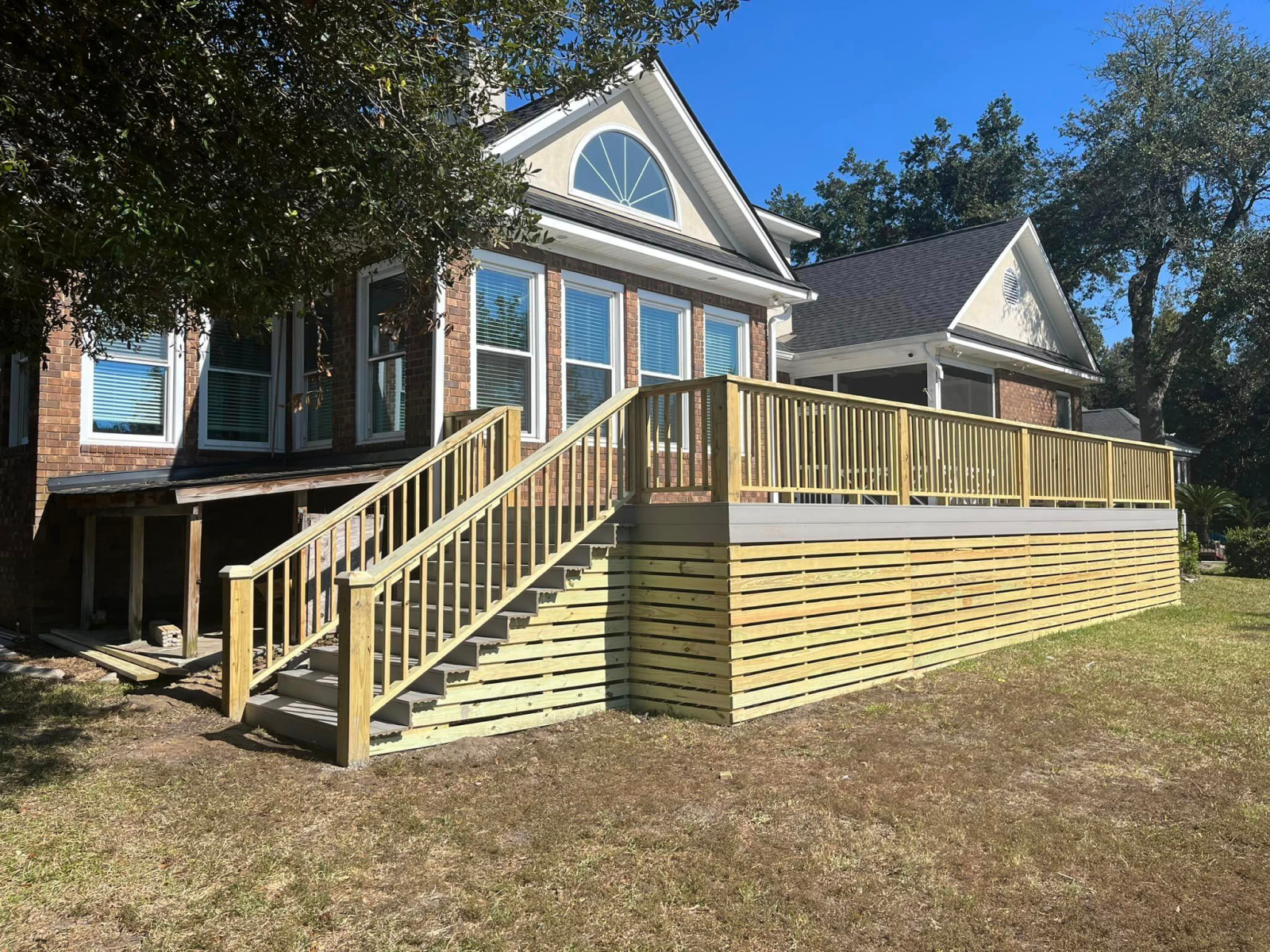
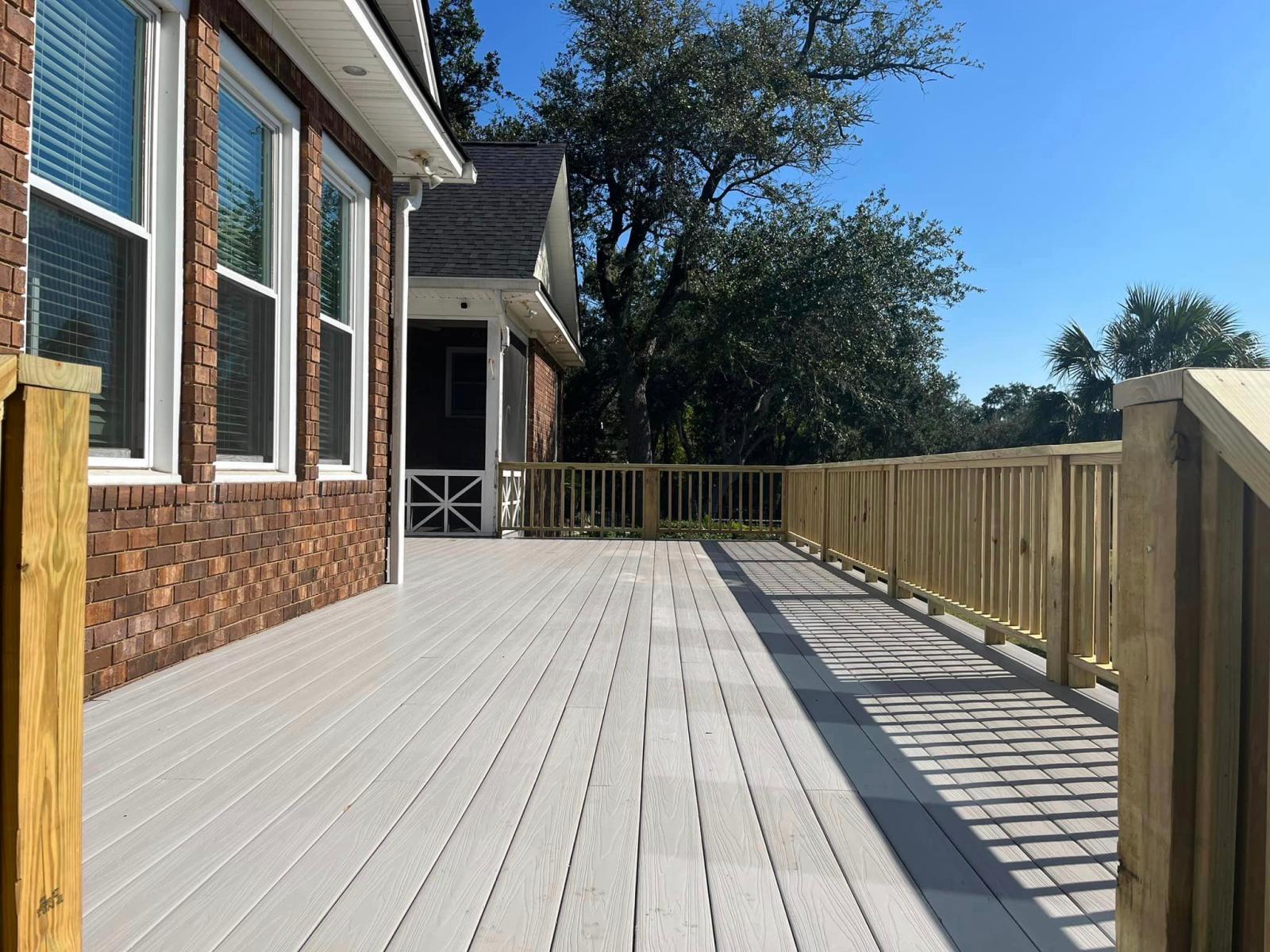
Your Exterior Pros builds outdoor structures that stand up to everything the Chatham County climate can deliver. We select pressure-treated lumber and corrosion-resistant fasteners designed for coastal environments, and we engineer every deck with the structural integrity needed to handle Atlantic weather patterns. Our team understands how humidity affects wood stability and how to build drainage into every design, so water moves away from your home instead of pooling on the surface. Whether you want a simple ground-level platform or a multi-level outdoor living space, we focus on durability first so you can enjoy your deck for years without constant repairs.
Building a deck isn't something you want to rush or guess at. Here’s what you can expect from start to finish when it comes to the process:
Choosing the right materials for your deck directly affects how well it holds up in coastal conditions. Salt air corrodes standard fasteners within a few years, while high humidity causes untreated wood to warp and split as temperatures shift. We select materials based on how they perform in this environment, not just what looks good on day one. The right combination of lumber, hardware, and structural design keeps your deck stable and safe for the long run.
| Material Category | Option | Benefit for Coastal Conditions |
|---|---|---|
| Lumber | Pressure-Treated Pine | Resists moisture damage and warping under humidity changes |
| Fasteners | Galvanized or Stainless Steel | Prevents rust and corrosion from salty air |
| Framing | Reinforced Joists and Posts | Meets elevated wind load requirements for storm resistance |
| Footings | Deep Concrete Anchors | Stabilizes the structure in sandy soil common across the region |
Elevated decks need railings at least 36 inches high to meet building codes, and we anchor every post to handle wind gusts during the storm season. For properties in historic districts, we work within local guidelines to choose materials and railing styles that meet both safety standards and appearance requirements. Proper site preparation includes soil stabilization where needed, so footings stay level over time instead of shifting as the ground settles.
A professionally built deck gives you functional outdoor space that holds up year after year, even with the humidity and weather conditions common to the coastal lowcountry. When you invest in quality materials and solid construction from the start, you protect your property and create a space your family actually uses instead of worrying about rotting boards or rusted fasteners.
Your Exterior Pros helps homeowners throughout the area build outdoor spaces designed to last. When you're ready to discuss your project, reach out to schedule a site evaluation. We'll walk through your design goals, review local code requirements, and provide a clear plan for building a deck that fits your property and budget.
Got questions about your roof? We’ve got answers. From maintenance tips to insurance claims and repair timelines, our FAQ section covers the most common concerns homeowners have. Get informed and make confident decisions about protecting your home.
Fall and early spring typically offer the most comfortable conditions for deck construction, with lower humidity and stable temperatures that help lumber adjust properly before installation. Building during these seasons also means less disruption from afternoon thunderstorms that are common in summer. We work year-round, but planning your project for these windows often results in a smoother installation process.
Press a flathead screwdriver into the wood in several spots, especially near ground contact and around fasteners. If the tool sinks in easily or the wood feels spongy, you're dealing with rot that affects structural integrity, not just surface wear. Surface staining or minor cracks can often be addressed with maintenance, but soft spots or crumbling wood mean those boards or support members need replacement.
Yes, properties within the Historic District require approval from the Historic District Board of Review before construction begins, and this process can add several weeks to your timeline. We handle permit applications and work with you to select railing styles and finishes that meet both safety codes and historic preservation guidelines. Starting this process early keeps your project on schedule and avoids costly delays or redesigns.
We’re available to answer any questions you have about your project during our normal business hours!
500
1,000


Our Roofing Experts Are Always Ready To Help!