We’re available to answer any questions you have about your project during our normal business hours!

Follow Us On


Schedule a Consultation
Richmond Hill is a great place to spend time outdoors, and most homeowners here know it. With warm weather that stretches well into the fall, wooded lots full of live oaks, and newer subdivisions with backyard pools, the demand for quality outdoor living space is real. But building a deck in this part of Georgia takes more than picking out boards and setting posts. The combination of around 50 inches of annual rainfall, high humidity, and coastal proximity near the Ogeechee River and surrounding salt marshes creates conditions that can push an improperly built deck toward warping, rot, or foundation shifting within just a few years.
That's where material selection, proper footings, and smart design all come together. Pressure-treated wood and composite roof decking both hold up well here, but only when the build accounts for moisture exposure, soil conditions, and Bryan County's elevation and setback requirements near wetlands. A deck that looks great on day one but wasn't built for this environment will show the wear quickly, especially on surfaces that see direct sun and afternoon thunderstorms through most of the year.
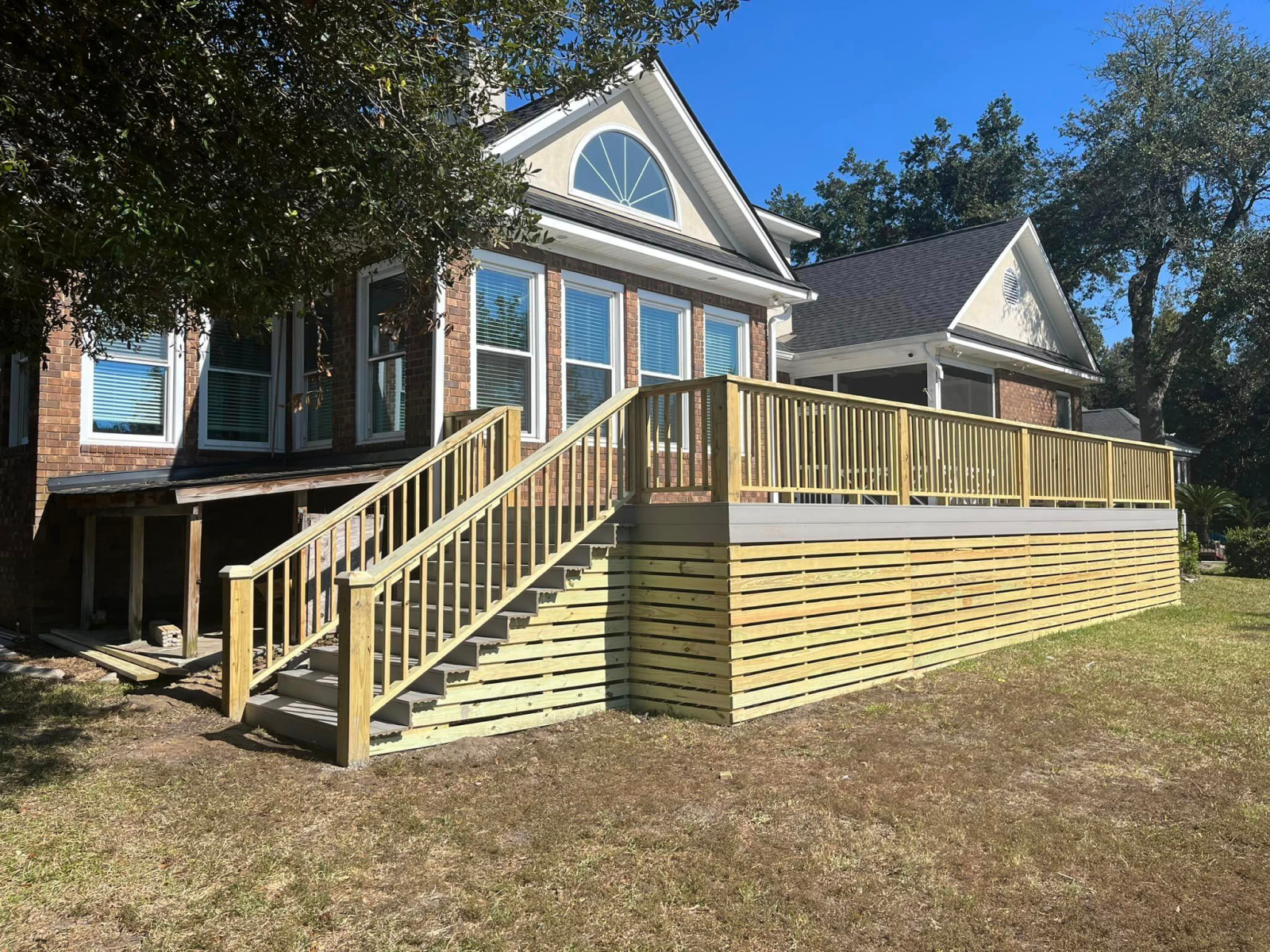
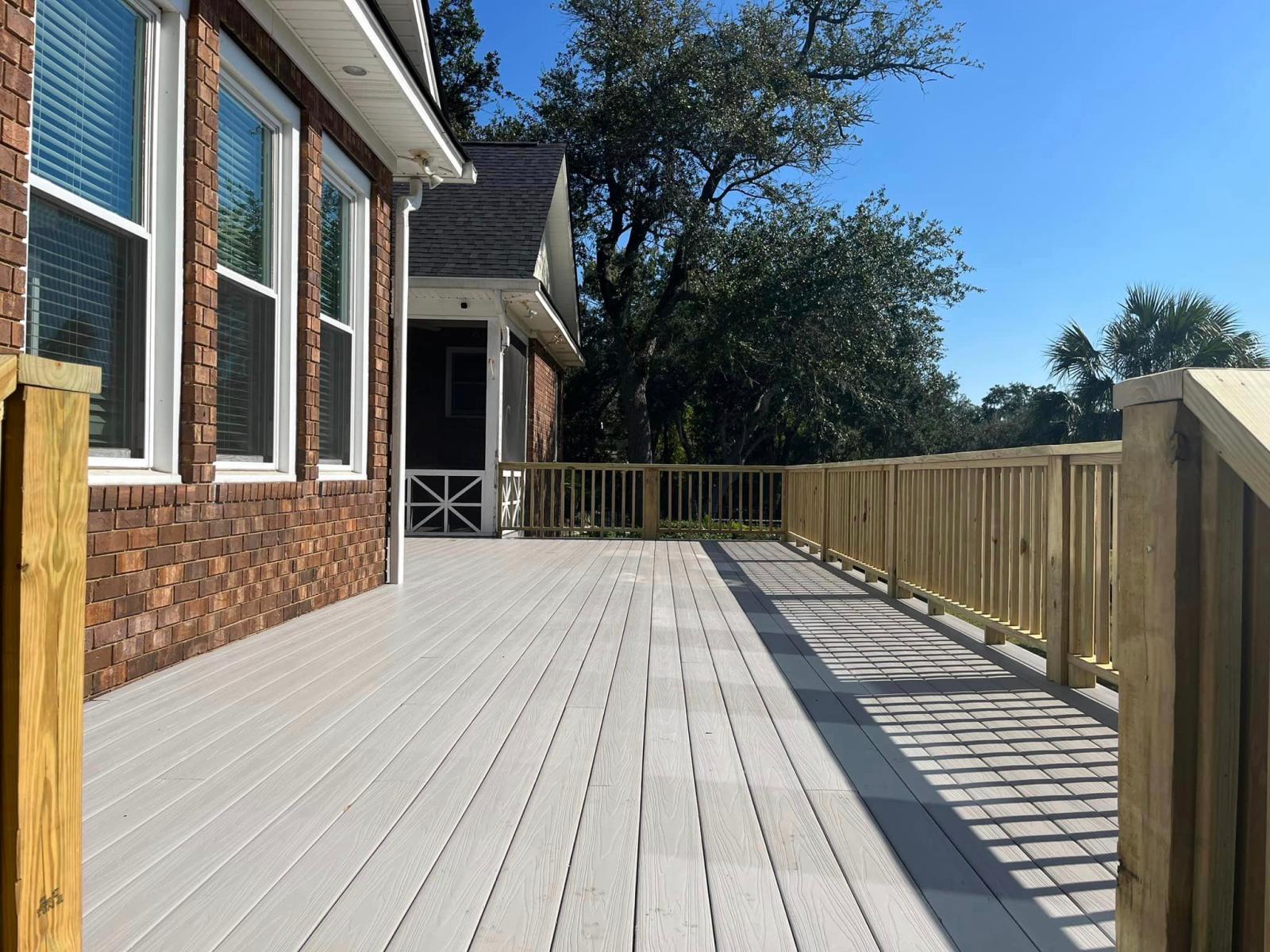
Your Exterior Pros works with Richmond Hill homeowners to design and build decks that fit the way people actually live here, whether that means a multi-level layout that takes advantage of a shaded canopy, a slip-resistant pool surround, or a seamless connection to an existing patio or screen porch. The goal is a finished structure that holds up for years without demanding constant attention.
Starting a deck project can feel overwhelming, but knowing exactly what happens from the first conversation to the final walkthrough makes the process more straightforward.
Building a deck here involves decisions that go well beyond picking a surface material. The combination of intense sun, frequent afternoon storms, coastal soils, and Bryan County code requirements all shape what your deck needs to look and perform its best over the long haul.
| Design Factor | Local Condition | What It Influences |
|---|---|---|
| Foundation depth and footing reinforcement | Shifting soils near salt marshes and the Ogeechee River corridor | Stability and resistance to minor flooding or soil movement |
| Deck slope and drainage | Frequent afternoon thunderstorms with rapid water pooling | Surface drainage to prevent standing water and wood damage |
| Elevation above base flood level | Bryan County wetland setback and flood elevation requirements | Permit approval, safety compliance, and usable footprint |
| Surface material and UV resistance | Year-round direct sun accelerates fading and surface wear | Long-term appearance and slip resistance near pool areas |
| Ventilation beneath deck boards | Still, humid air is common throughout the region | Airflow that slows moisture buildup and extends material life |
Timing your build also matters. Spring and fall are the preferred windows in Richmond Hill, giving materials time to acclimate properly before summer heat and humidity arrive or winter moisture cycles begin. A well-timed build with the right design details is what separates a deck that stays solid for years from one that starts showing problems far too soon.
If your deck will surround an inground pool, the surface texture and transition design matter as much as the material itself. We select and install surfacing specifically rated for wet conditions, keeping your family safer in spaces that stay wet throughout the warm months.
Many Richmond Hill lots feature mature live oaks that create natural shade at different heights across the yard. A multi-level deck lets you take full advantage of that canopy, separating spaces for dining, lounging, or grilling without crowding everything onto a single flat platform.
Bryan County sets specific rail height standards tied to deck elevation, and those requirements aren't one-size-fits-all. We size and install railing systems that meet local safety codes while complementing the finished look of your deck, whether you prefer a traditional wood rail or a more open design.
Connecting a new deck to an existing patio, screen porch, or home entry takes careful attention to height transitions, flashing, and structural attachment points. Done right, the addition feels like it was always part of your home rather than something bolted on after the fact.
Richmond Hill's outdoor season runs long, and a well-built deck gives your family real space to enjoy it. The humidity, rainfall, and coastal soils throughout the area mean the details of your build matter far more than they might in a drier climate. Getting the foundation, materials, and drainage right from the start protects your investment and keeps your deck looking and performing the way it should for years without piling on maintenance demands.
If you're ready to add quality outdoor living space to your home, Your Exterior Pros is a straightforward call or form submission away. We're happy to visit your property, talk through your options, and help you figure out what actually makes sense for your lot and your goals. No pressure, just a clear conversation about what a well-built deck in Richmond Hill looks like for you.
Got questions about your roof? We’ve got answers. From maintenance tips to insurance claims and repair timelines, our FAQ section covers the most common concerns homeowners have. Get informed and make confident decisions about protecting your home.
Yes, and it's something a lot of homeowners don't think about until they're already dealing with premature corrosion or wood degradation. Salty air accelerates rust on fasteners and brackets, and it speeds up moisture absorption in untreated wood. In Richmond Hill, that means specifying corrosion-resistant hardware and choosing materials rated for coastal exposure isn't optional. It's the difference between a deck that holds up and one that starts failing at the connection points within a few years.
Bryan County requires permits for deck construction that cover foundation specifications, elevation above base flood level, and setback distances from wetlands. If your lot is near a marsh or within a flood zone, those elevation and setback rules directly affect how large your deck footprint can be and how high it needs to sit. We handle the permit process as part of your build, so you're not navigating county requirements on your own or discovering mid-project that something needs to be redesigned.
Richmond Hill's humidity tends to settle and stay, especially in areas with tree cover and limited wind movement. When airflow beneath a deck is restricted, that trapped moisture accelerates rot in wood framing and encourages mold growth on the underside of boards, even on composite surfaces. Proper spacing, fastener placement, and deck height all work together to keep air moving underneath, which quietly extends the life of your deck without requiring any extra maintenance on your end.
We’re available to answer any questions you have about your project during our normal business hours!
500
1,000


Our Roofing Experts Are Always Ready To Help!