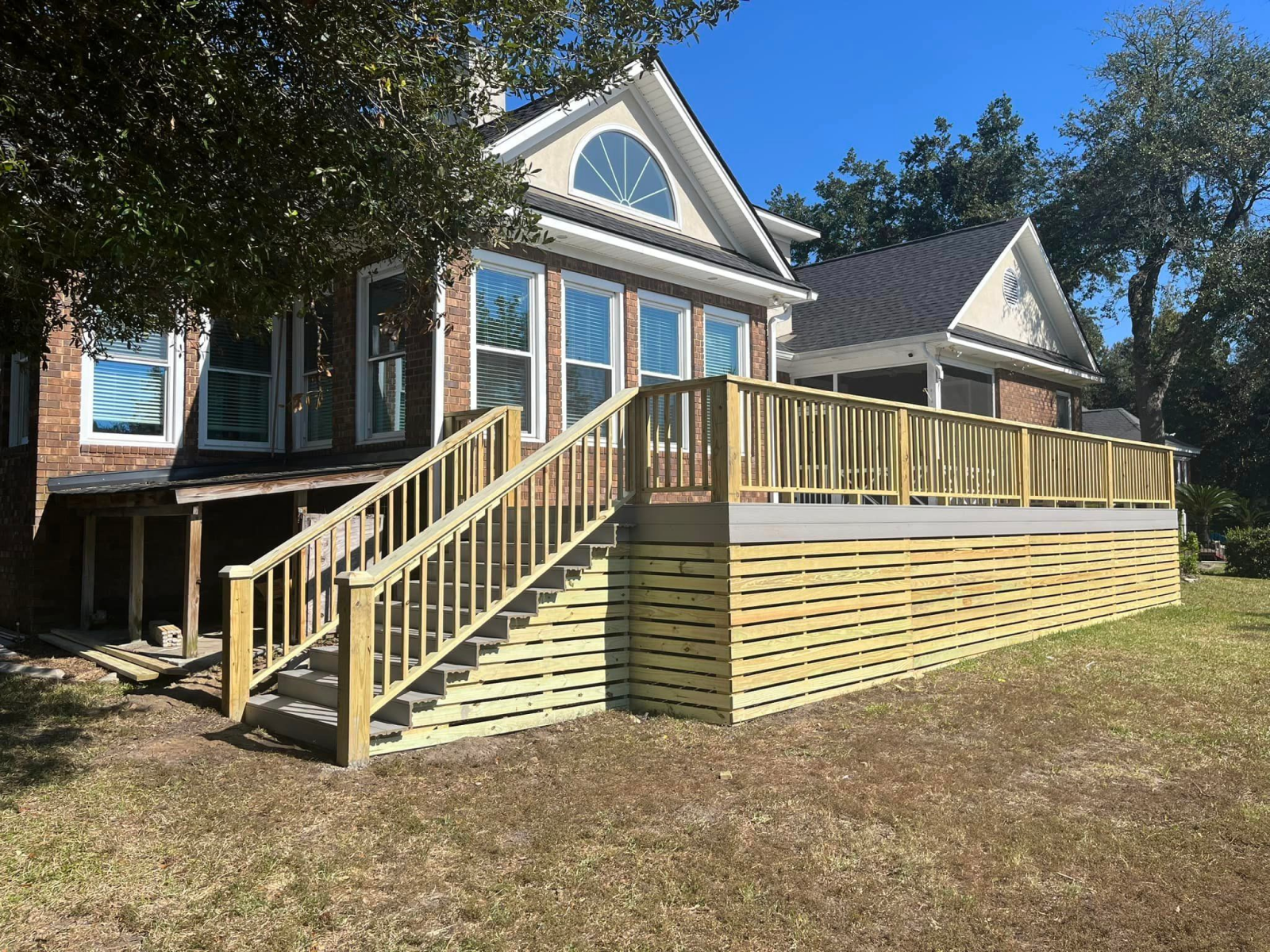
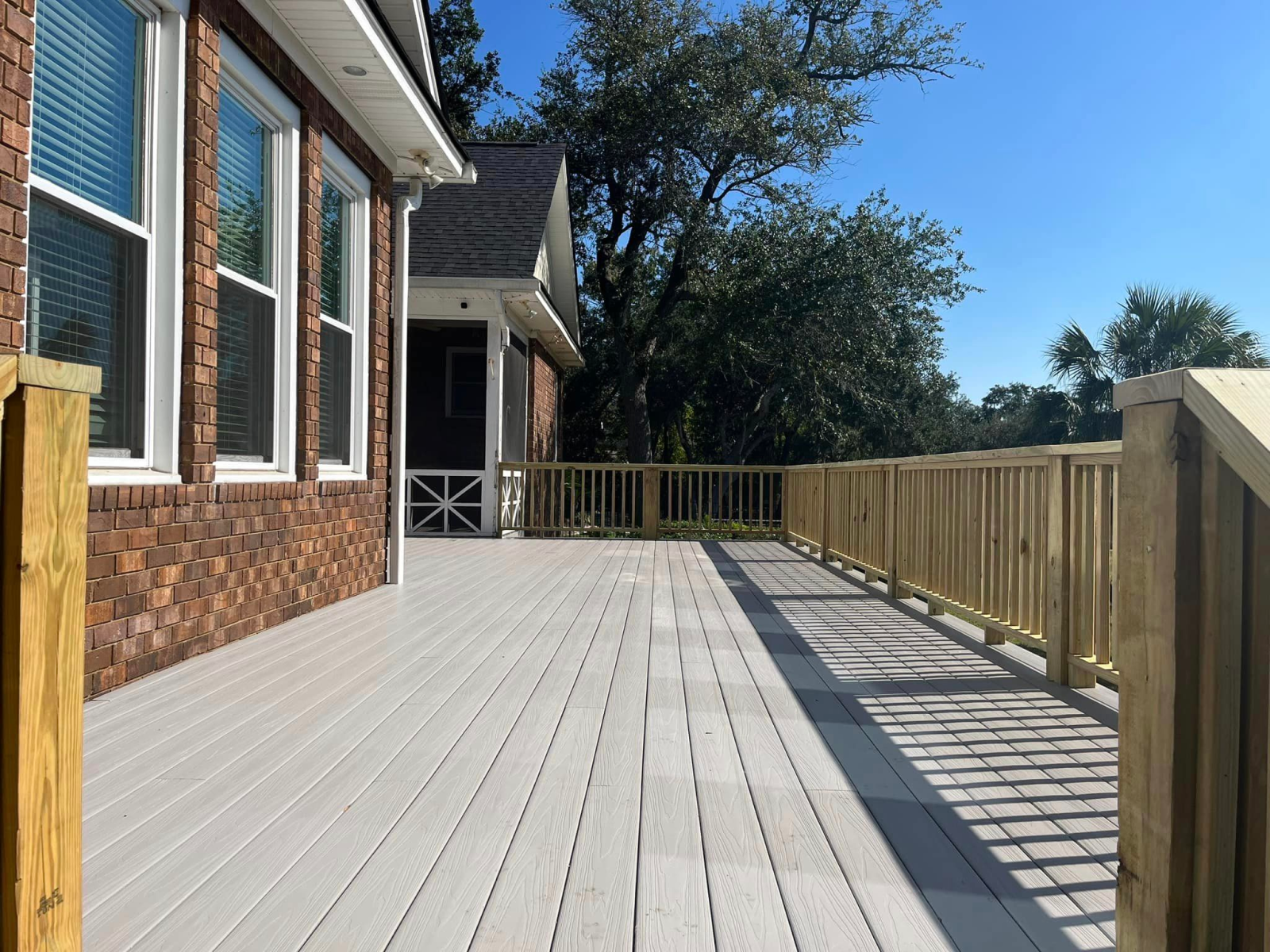
We’re available to answer any questions you have about your project during our normal business hours!

Follow Us On


Schedule a Consultation
Port Wentworth summers are long, wet, and hard on outdoor structures. With temperatures pushing into the 90s and rainfall spread across much of the year, wooden decks here face constant pressure from moisture, heat, and UV exposure. That kind of weather takes a real toll over time, warping boards, loosening fasteners, and breaking down finishes faster than homeowners expect. Older homes in the area often have decks that were built decades ago and are showing their age, while newer properties on the outskirts of town are ready for outdoor living spaces that match the way families actually use their yards.
Building a deck that holds up in this environment takes more than picking a design you like. The humid conditions here mean drainage, ventilation under the deck, and keeping wood away from direct soil contact are not optional extras. Termite pressure in coastal Georgia is real, and it shapes how a well-built deck should be designed from the ground up. At Your Exterior Pros, we understand what outdoor structures need to last in this part of the state, and we build with those conditions in mind from the first board to the final inspection.
Deck work in Chatham County that involves new construction or structural changes requires permits and must meet local building codes. That process includes plan review and inspections, and it protects your investment in your property by ensuring the structure is built correctly from the start.
Building a deck involves more than choosing its size and appearance, and knowing what happens before construction begins can make the project easier to manage. We evaluate your property, discuss the available options, and explain the planned work before moving ahead.
Choosing the right material is one of the most important decisions you will make for your deck. In this part of coastal Georgia, heat, humidity, and frequent summer rain put every surface to the test, and the wrong choice can mean warped boards, rusted fasteners, and failing finishes far sooner than you planned for.
| Material Type | Performance in Wet Conditions | Maintenance Level |
|---|---|---|
| Pressure-treated lumber | Good with proper drainage and ventilation | Moderate; requires periodic sealing |
| Composite decking | Excellent; resists warping and rot | Low; no staining or sealing needed |
| PVC decking | Excellent; impervious to moisture | Very low; wipes clean easily |
| Hardwood decking | Good with quality finish upkeep | Higher; needs regular refinishing |
Beyond surface material, the way your deck is built underneath matters just as much here. Proper ventilation beneath the structure, corrosion-resistant fasteners, and keeping all wood well above soil contact are not optional details in a termite-active, high-moisture environment. These construction choices protect your investment in your property and reduce the maintenance work you face year after year. The right material paired with the right build approach is what gives a deck a real chance to last in Port Wentworth's conditions.
Your railing system is more than a safety requirement; it shapes how your deck looks and how it holds up over time. We offer wood, aluminum, and cable railing options sized to your layout and built to meet Chatham County code for height and spacing.
The framing beneath your deck is what everything else depends on, and it has to be right. We use properly sized joists, beams, and hardware rated for outdoor use, and when attaching to your home, we flash and fasten the ledger correctly to keep water from working its way into your exterior wall.
A well-built staircase makes your deck more usable and keeps it up to code. We size stringers, risers, and treads to meet local requirements and build landings that drain properly so standing water does not become a slip hazard or rot problem at the base.
Once your deck is built, the finish you choose determines how long it stays looking good between maintenance cycles. We walk you through sealing and staining options suited to Port Wentworth's UV exposure and humidity so your deck surface holds up through long, wet summers without peeling or fading ahead of schedule.
Port Wentworth's long warm season means your deck can get real use for most of the year, and that makes it worth building correctly. The combination of heat, humidity, and regular rainfall here is hard on outdoor structures that were not built with those conditions in mind. A deck that is properly designed, permitted, and constructed with the right materials will hold up year after year with far less maintenance than one that cuts corners on drainage, framing, or finish.
Whether you are replacing an aging structure on an older home or adding outdoor living space to a newer property, Your Exterior Pros is ready to help you get there. Reach out when you are ready to talk through what you have in mind, and we will take it from there.
Got questions about your roof? We’ve got answers. From maintenance tips to insurance claims and repair timelines, our FAQ section covers the most common concerns homeowners have. Get informed and make confident decisions about protecting your home.
Any new deck or structural deck work in Chatham County requires a permit, which includes plan review and at least one inspection before the project is complete. We handle the permit process for you, so you are not figuring that out on your own. Scheduling the required inspections does add some time to the overall timeline, but building without a permit creates real problems down the road, especially if you sell your home or need to file a homeowners insurance claim.
Termite activity in this region is serious, and it affects decisions made before a single board goes down. That means keeping all wood well above soil level, using pressure-treated lumber rated for ground-contact applications where needed, and selecting corrosion-resistant hardware that does not break down from the treated chemicals over time. How the deck is ventilated underneath also matters, since damp, dark spaces with poor airflow are exactly where problems tend to start.
Frequent afternoon rain during the warmer months can affect scheduling, particularly when it comes to concrete footings that need time to cure or finishes that need dry conditions to bond properly. We plan around the forecast as much as possible and sequence the work so wet days do not stall the whole project. If you are adding a finish or sealant after construction, timing that application for a dry stretch in late spring or early fall gives it the best chance to set correctly in this climate.
We’re available to answer any questions you have about your project during our normal business hours!
500
1,000


Our Roofing Experts Are Always Ready To Help!