We’re available to answer any questions you have about your project during our normal business hours!

Follow Us On


Schedule a Consultation
Bloomingdale homeowners know that outdoor living is practically a year-round reality here. The warm coastal Georgia climate means your backyard gets used far more often than in colder markets, and a well-built deck becomes an extension of your home rather than just a seasonal bonus. But that same humid air, steady rainfall, and heat that makes outdoor living so appealing also puts real pressure on any wood or composite structure sitting outside through every season. Without the right materials and construction approach, decks in this area can show wear faster than expected, from warping boards and rusted fasteners to soft spots that develop quietly beneath the surface until they become a safety concern.
That is where having a local deck builder matters. Your Exterior Pros works with Bloomingdale homeowners on everything from brand-new deck builds to full tear-offs and replacements of older structures that have run their course. Whether you are starting from scratch, adding on to an existing deck, or replacing something that has seen too many Georgia summers, the right approach makes a difference in how your deck holds up and how much you actually use it.
Treated lumber and composite decking are the two materials that make the most sense for this market, and both come with their own advantages depending on your budget, your goals, and how much maintenance you want to take on. Features like stairs, railings, and built-in seating are just as important as the deck surface itself, and a complete build should work for your space, not just fill it.
A successful deck project starts with understanding the property as much as the deck itself. Grade, drainage, the home’s connection point, and the condition of an existing structure all influence what can be built and how it should be constructed.
Choosing the right decking material is one of the most important decisions you will make for your outdoor space. In a humid coastal climate like Bloomingdale, both treated lumber and composite decking are solid choices, but each one fits a different situation. Knowing how they compare helps you pick what actually works for your property, your budget, and how you plan to use the space.
| Feature | Treated Lumber | Composite Decking |
|---|---|---|
| Upfront Cost | Lower initial investment | Higher initial investment |
| Maintenance | Requires sealing, staining, and regular upkeep | Low maintenance; cleaning is typically enough |
| Moisture Resistance | Good when properly maintained | Strong resistance to moisture and humidity |
| Durability Over Time | Susceptible to warping and rot if neglected | Holds up well through heat, rain, and repeated use |
| Best Fit | Budget-focused builds or replacement projects | Low-maintenance outdoor living spaces |
Bloomingdale’s steady rainfall and summer heat put both materials to the test over time. Treated lumber can perform well for years with consistent care, while composite decking reduces the amount of ongoing maintenance you need to keep your deck looking good and functioning safely. Either way, the right choice depends on your goals, and we will help you sort that out before anything gets built.
A deck is only as solid as what holds it together beneath the surface. Every build includes properly spaced joists, corrosion-resistant fasteners, and secure ledger attachment where the deck connects to your home, all details that determine how the structure handles moisture, weight, and years of everyday use in Bloomingdale’s humid conditions.
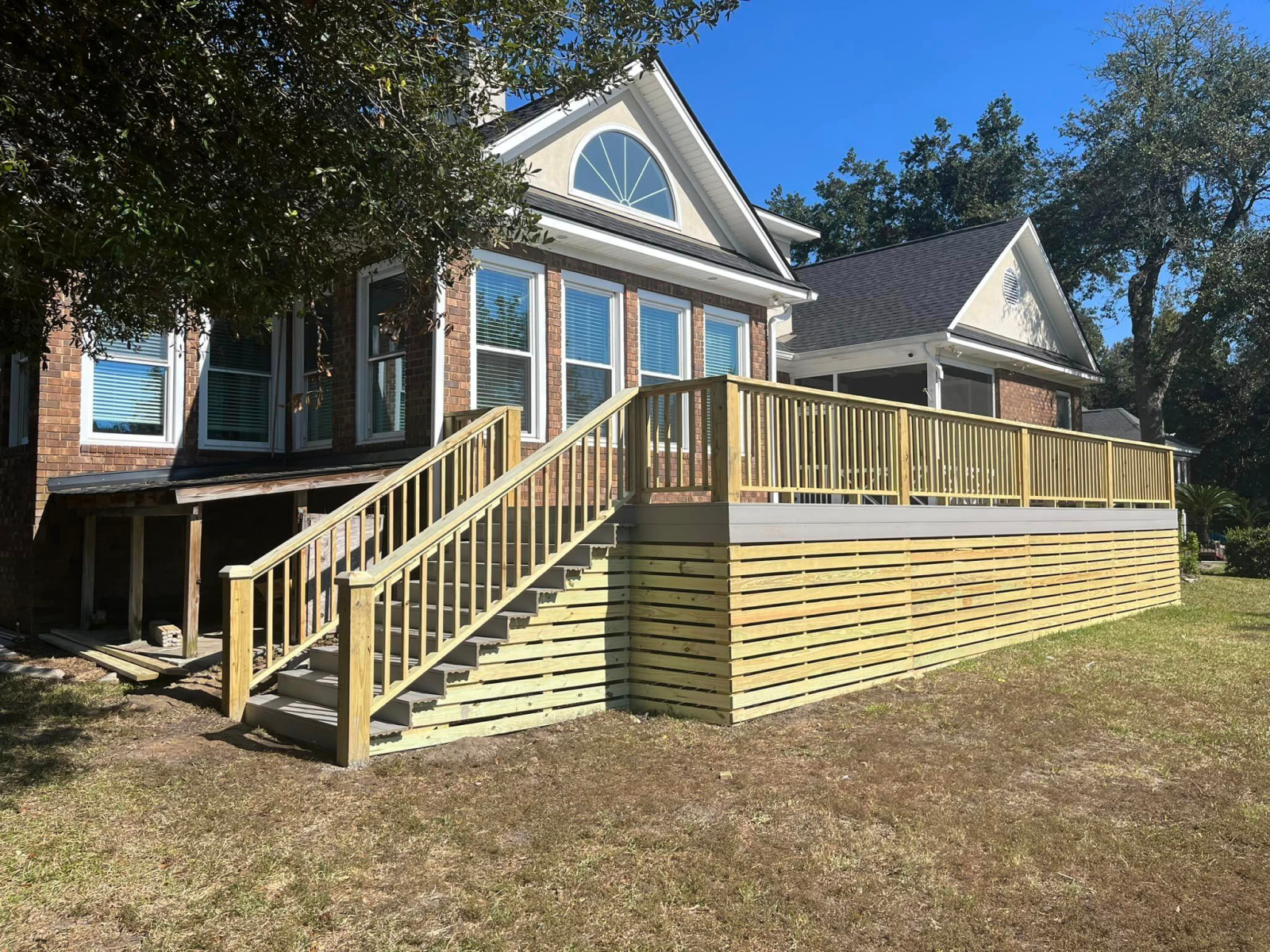
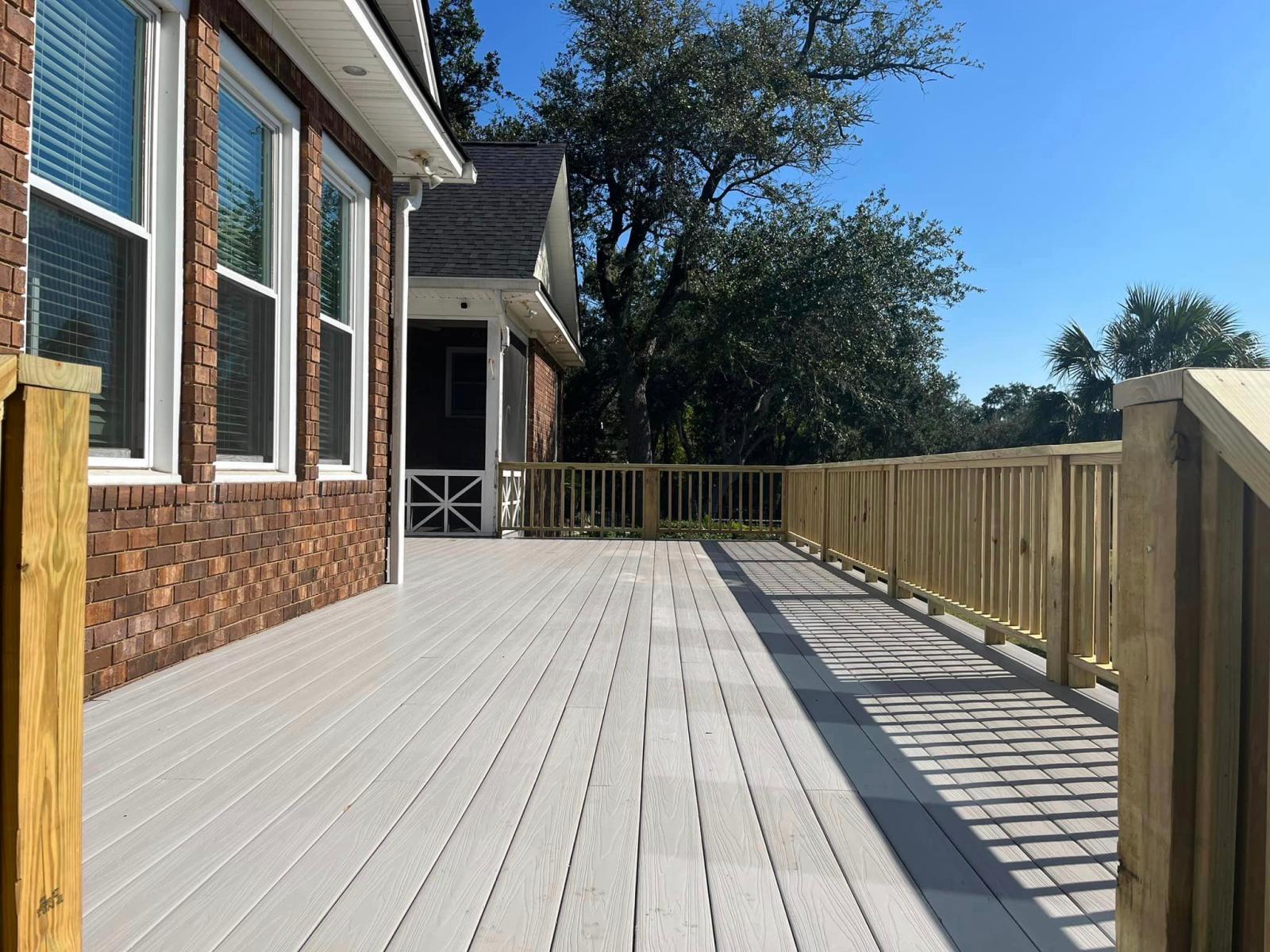
A complete deck build goes beyond the surface boards. Stairs sized for comfortable use, code-compliant railings, and optional built-in seating or privacy screens are all part of what turns a basic platform into a space your family actually wants to spend time on.
Decks attached to your home or built above ground level typically require a permit through Chatham County, and skipping that step can create real headaches down the road. Your Exterior Pros manages the permit process so the build is done correctly from the start and you do not have to worry about compliance after the fact.
Not every yard is the same shape, and not every homeowner wants the same layout. Your deck is planned around your specific outdoor space, whether that means a simple single-level addition, an extension off an existing structure, or a multi-feature build designed for entertaining and everyday backyard access.
Bloomingdale’s outdoor-friendly climate means a well-built deck gets used regularly, not just on special occasions. Whether you are adding a new deck, replacing an aging structure, or upgrading what you already have, the right build gives you a reliable outdoor space that holds up through heat, humidity, and frequent rain without constant upkeep pulling your attention. That kind of durability pays off over time, both in how much you actually enjoy the space and in the long-term value it adds to your property.
Your Exterior Pros is ready to help you figure out what makes sense for your yard, your goals, and your budget. Reach out whenever you are ready to talk through your options, and we will take it from there.
Got questions about your roof? We’ve got answers. From maintenance tips to insurance claims and repair timelines, our FAQ section covers the most common concerns homeowners have. Get informed and make confident decisions about protecting your home.
Yes, and it’s something most homeowners do not think to ask about until they notice it. Treated lumber naturally absorbs and releases moisture depending on conditions, which means boards can shift slightly as a new deck adjusts to the outdoor environment here. This is normal, not a sign of a problem, and it’s one reason proper spacing between boards and the right fastener placement matter so much during installation in a humid coastal market like this one.
It depends on what you want the deck attached to and how the build is structured. Attached decks require a solid ledger connection to the home, which means the existing wall framing and any moisture barrier behind it get inspected before anything goes up. In some cases, a freestanding deck design solves the problem entirely by keeping the structure independent from the house while still sitting close to a door or access point.
Railings and stair stringers tend to show wear earlier than the main deck surface because they are more exposed to standing water and repeated contact. In Bloomingdale’s wet conditions, the fasteners and hardware holding those parts together are also worth paying attention to since low-quality hardware corrodes faster than most homeowners expect. Planning for corrosion-resistant fasteners and treated or composite railing materials from the start reduces the chance that one worn part becomes a bigger repair later.
We’re available to answer any questions you have about your project during our normal business hours!
500
1,000


Our Roofing Experts Are Always Ready To Help!