We’re available to answer any questions you have about your project during our normal business hours!

Follow Us On


Schedule a Consultation
Rincon homeowners have a lot going for them when it comes to outdoor living. Spacious lots, mild winters, and long stretches of warm weather make backyard decks a natural fit here. But building one that actually holds up takes more than good weather and a free weekend. With around 50 inches of rainfall each year and humidity that rarely lets up, the wrong materials or a poorly designed deck can start showing problems within just a few seasons. Wood expands and contracts with temperature changes, clay soils shift under footings that weren't built deep enough, and standing water on a deck that wasn't pitched correctly leads to rot and structural headaches faster than most homeowners expect.
That's where working with an experienced local deck builder makes a real difference. Your Exterior Pros understands the specific conditions in Rincon, from the soil composition under your yard to the building codes that govern how footings, ledger boards, and railing systems need to be installed. Coastal proximity means local code also factors in wind resistance, so there's no cutting corners on structural hardware or framing spans if you want a deck that's built to last.
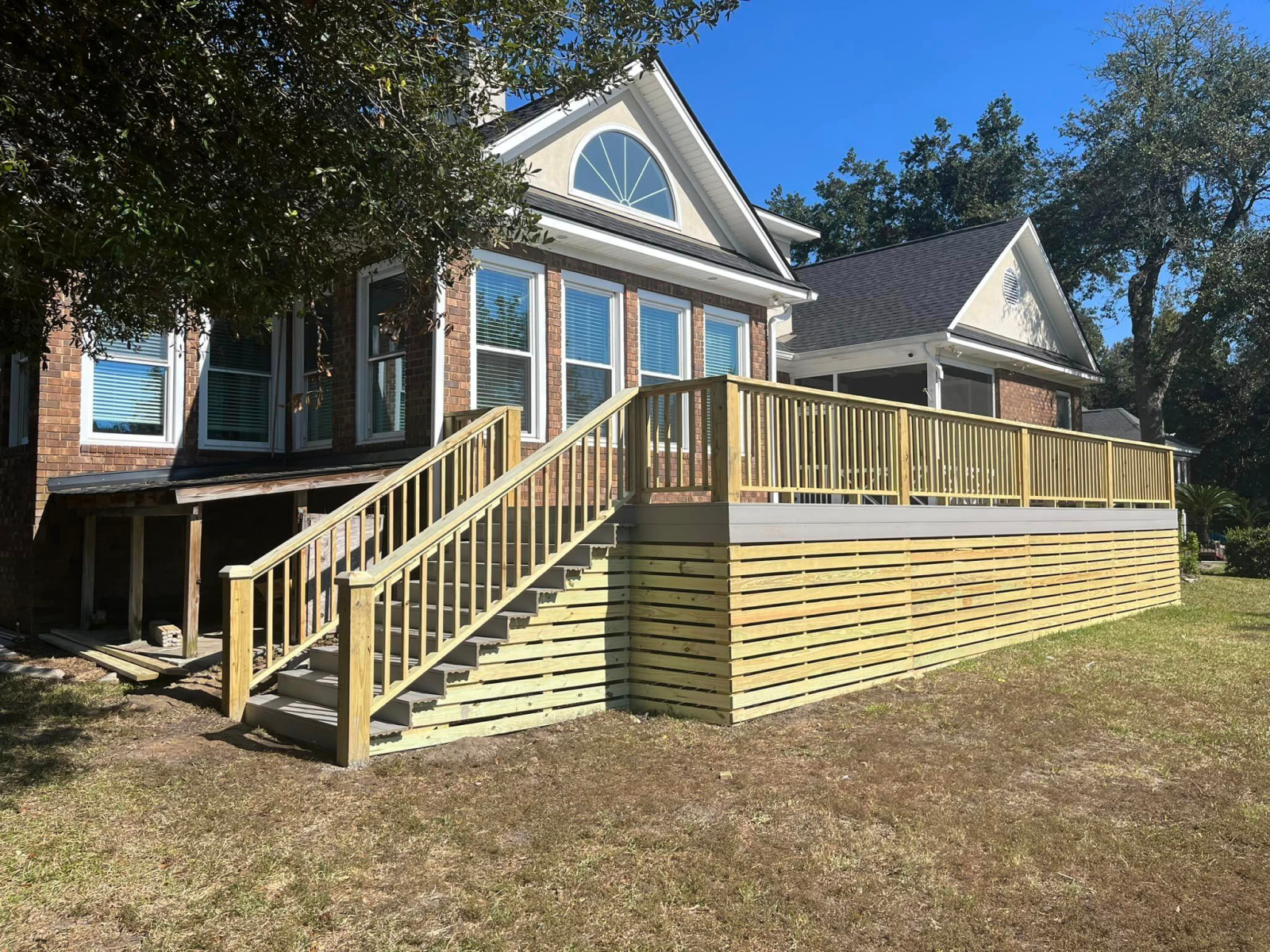
Whether you're planning a simple ground-level platform or a larger elevated deck off the back of your home, getting the foundation and framing right from the start is what separates a deck that ages gracefully from one that needs constant repairs.
Knowing what to expect before a single board goes down makes the whole process easier and keeps surprises off the table from start to finish.
Building a deck in Rincon involves more than selecting materials and breaking ground. Local code requirements, soil conditions, and structural standards all shape how your deck gets designed and built. Understanding what's involved helps you plan realistically and avoid delays once the project is underway.
| Permit Type | When It Applies | Typical Timeline |
|---|---|---|
| Standard deck permit | Decks over 30 inches above grade | Around 2 weeks |
| Covered deck permit | Covered structures over 300 square feet | Around 3 weeks |
| Zoning review | Decks near property lines or lot coverage limits | Varies by case |
Beyond permitting, your deck's structural integrity depends on decisions made early in the build. Rincon's clay soils are prone to shifting, so poured concrete piers are a far better choice than surface-level blocks for footings. Joist blocking between spans adds stability on larger decks, which is common here, given the generous lot sizes throughout the area.
Railing systems need to meet code for height, spacing, and weight capacity, and materials like metal work especially well in humid conditions where wood railings tend to deteriorate faster. Getting these details right from the start is what keeps your deck solid and code-compliant for years to come.
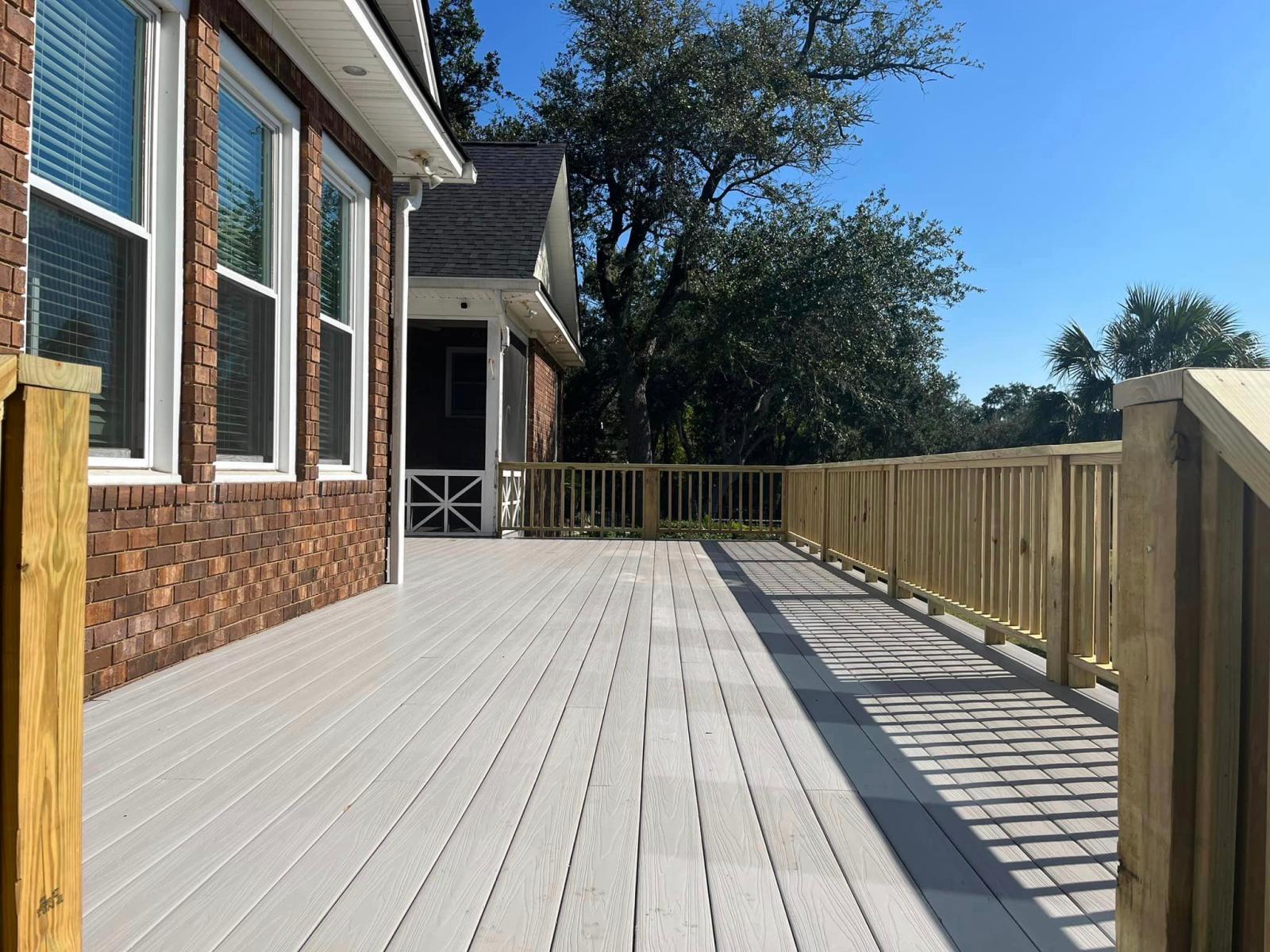
Not every decking material holds up equally in Rincon's humid, rain-heavy environment. We help you choose between pressure-treated lumber, composite decking, and other options based on your budget, how you plan to use the space, and what will actually perform well given the moisture and temperature swings your deck will face year after year.
Where your deck connects to your home is one of the most vulnerable spots on any build. We install proper flashing at every ledger attachment to keep water from working its way behind the connection point and into your home's framing, which is a common source of hidden rot on decks that weren't built with this detail in mind.
Stairs are built to Georgia's residential code standards, covering tread depth, riser height, and stringer sizing so every step feels solid and consistent underfoot. If your yard has any grade change between the deck and ground level, we account for that in the stair layout so the finished result is safe, functional, and visually clean.
If your household needs accessible entry to the deck, we can incorporate a ramp built to ADA standards alongside applicable state and local requirements. This is worth planning during the design stage rather than adding later, since ramp slope, width, and landing dimensions all factor into how the overall deck layout needs to be sized.
Rincon's long warm seasons and generous lot sizes make outdoor living genuinely worth investing in. A well-built deck adds usable space to your home, holds its value over time, and avoids the expensive repairs that come with shortcuts on materials or structural details. With the humidity and rainfall this area sees, getting the build right from the start means years of use instead of years of maintenance headaches.
Your Exterior Pros is ready to help you move from planning to a finished deck you can actually enjoy. Whether you're early in the process or ready to get started, reaching out to our Rincon team to discuss your yard, your goals, and your options is a straightforward first step. There's no pressure to decide anything right away, just a conversation to get things pointed in the right direction.
Got questions about your roof? We’ve got answers. From maintenance tips to insurance claims and repair timelines, our FAQ section covers the most common concerns homeowners have. Get informed and make confident decisions about protecting your home.
Yes, and it's one of the most important decisions in the entire build. Clay soil expands when wet and contracts when dry, which causes footings to shift over time if they aren't designed with that movement in mind. Poured concrete piers that extend below the frost line give you a stable base that surface blocks simply can't match in this soil type. Getting this right at the start protects the entire structure above it.
Unpermitted decks can create real problems when you go to sell your home. Buyers' lenders and inspectors often flag unpermitted structures, which can stall or kill a sale entirely. You may also face fines or be required to tear down and rebuild to current code standards at your own expense. The permit process exists to make sure your deck is structurally sound, and skipping it trades a small upfront convenience for a much bigger problem later.
Late spring and early fall tend to work well here. Summer brings afternoon thunderstorms that can interrupt a build and affect how materials cure and set, while the wet stretch of late winter can make site prep and concrete work harder to time correctly. Planning your project to start in April or September gives you the most predictable working conditions and keeps the schedule on track from the ground up.
We’re available to answer any questions you have about your project during our normal business hours!
500
1,000


Our Roofing Experts Are Always Ready To Help!